8 Digital Tools That Replace Your Entire GM Binder
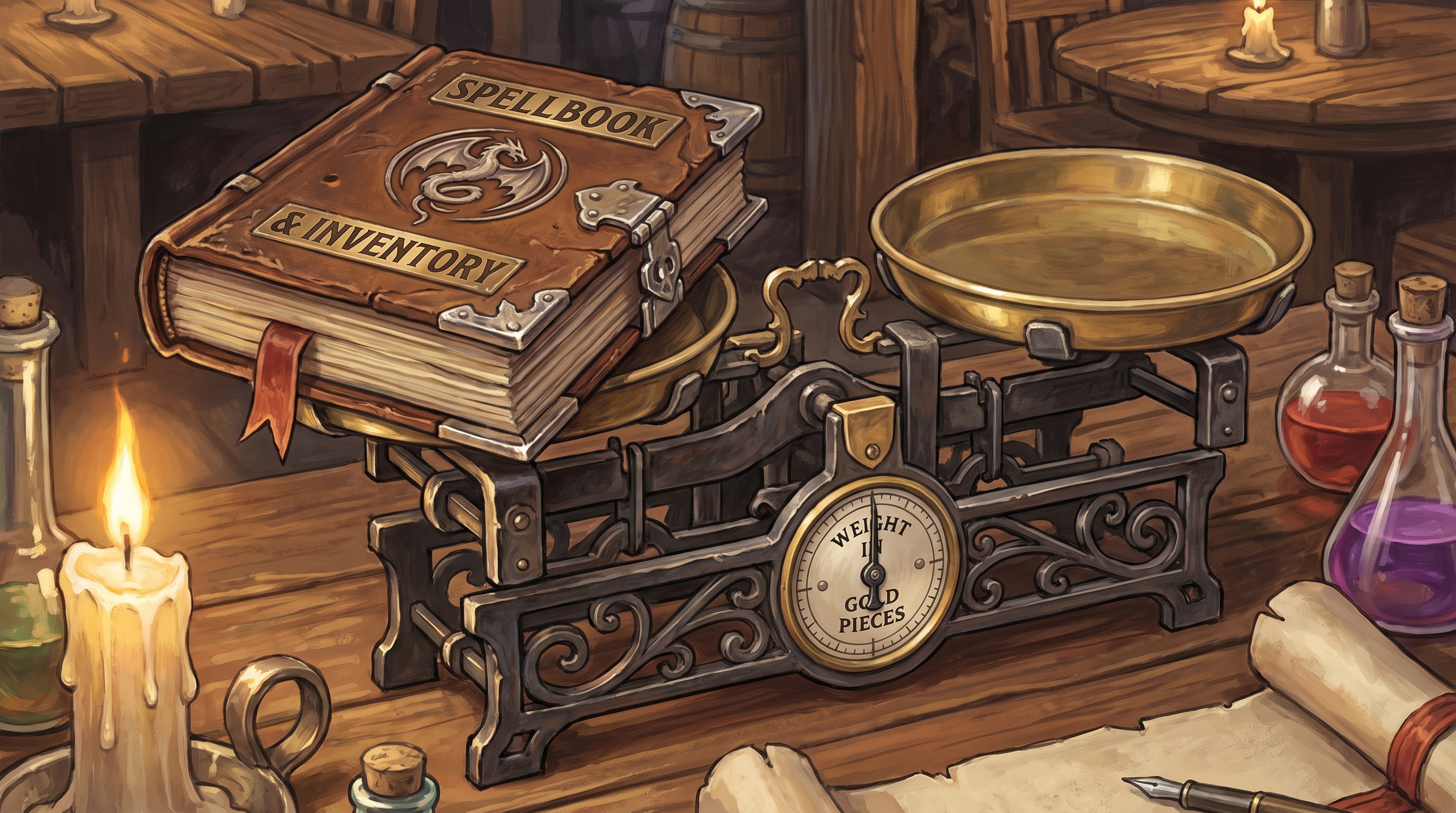
My GM binder weighs four pounds.
I know this because I weighed it. On a kitchen scale. At 1 a.m. Like a normal, well-adjusted adult who definitely does not curse himself for his own hobbies.
It holds 218 pages. Roughly nine of them ever get opened at the table.
Here is the moment that broke me. Session 31. A player leans in and asks, in a voice dripping with sincerity, “What was the innkeeper’s name again?”
I know I wrote it down. I wrote it down lovingly. Two sessions ago, on a page with a little sketch of a mug on it. So I start flipping. Five people watch me flip. The flipping continues. Someone opens their phone. Someone else starts talking about pizza. The scene, which was going so well, is now a corpse on the floor.
Thirty seconds later I say “Bob,” which is a lie, and we move on.
Look. Your binder is not the problem because it’s paper. Your binder is the problem because it’s a storage device, and storage was never your bottleneck. Your bottleneck is retrieval. You need the innkeeper’s name in four seconds, not four minutes, and a three-ring binder is physically incapable of a keyword search.
So I went fully digital. Laptop at the table, twelve tabs open, the whole gremlin setup.
Did that fix it? Nope. Not even a baby bit.
Well. Okay. Partly. Because what I learned is that “digital vs. paper” is a fake boss fight, and the actual answer is way stupider and way better. Stay with me here.
First, The Rules. I Call It The Binder Test.
Every tool below survived three questions. Fail two, get cut. No exceptions, no matter how many YouTubers love it.
1. The Ten Second Rule. Can you open it and find one specific fact in ten seconds, with five people staring at you? If it needs a login, a loading screen, and three clicks, it fails. Your binder does this in about thirty seconds. That is the bar you are beating.
2. The Airplane Mode Rule. Turn off the Wi-Fi. Does it still work? Basements, cabins, game store back rooms, and convention halls are where tables actually sit, and all four of those places want your connection dead.
3. The Divorce Rule. If the company shuts its doors tomorrow morning, what do you walk away with? Your binder scores perfect here. It’s paper. Paper does not get acquired.
That third rule sounds paranoid. It is not paranoid. I will show you the graveyard in a minute.
The Eight Tabs, Replaced
1. Session Prep → Obsidian/Notion (free)
This is the anchor. Obsidian writes plain markdown files that sit in a folder on your own computer. No cloud, no account, no subscription, no company.
Mike Shea, who writes Sly Flourish and basically invented modern lazy prep, moved his whole workflow to Obsidian for one reason: the files sit in his own directories, and he does not need to trust a cloud service to be up when he needs it. That’s the entire pitch.
Binder Test: 10 seconds yes. Offline yes. Divorce? You keep everything, because you already own it. Perfect score.
2. Rules Reference → D&D Beyond ($0 to a lot)
Ctrl+F on a rulebook is the single biggest upgrade over paper, full stop. Stat blocks in tabs during combat is worth the price on its own.
But be honest about the trade. You are renting books. Your library is a login. Multiple GMs in that Sly Flourish orbit, including Shea himself, still keep physical books tabbed with sticky notes on a folding stand like medieval monks, and they are not wrong.
Binder Test: 10 seconds yes. Offline no. Divorce no. It fails two rules, and it’s on this list anyway, because searchable rules are that good. Just do not build your campaign inside it.
3. Maps At The Table → Owlbear Rodeo (free tier)
If you own a TV, a tablet, or a laptop you can flip around, Owlbear Rodeo is the lightest way to put a battle map in front of people. Load image, drop tokens, done. No module install, no ninety-minute setup ritual.
This is the tool for GMs running in person who do not want a full virtual tabletop. And that distinction matters more than the roundups admit. For an in-person game, a map display plus an initiative tracker beats a fully automated VTT every single time, because the VTT is a second game you also need to play.
Binder Test: 10 seconds yes. Offline mostly no. Divorce, eh, your map images are still your map images.
4. Map Making → Dungeon Alchemist ($44.99, one time)
Draw a room shape, pick a biome, and it furnishes the place for you. Export straight into whatever you’re displaying on.
One time payment. No subscription. In a hobby drowning in $10 monthly fees, that is worth saying out loud twice.
Binder Test: Not a ten-second tool, it’s a prep tool. Offline yes, it runs on your machine. Divorce yes, you keep the exported files.
5. Random Tables → Donjon (free)
Names, taverns, treasure, weather, dungeon layouts, whole hex regions. Free, browser based, ugly as sin, faster than any table you would roll by hand.
Here is the move nobody does: do not use it at the table. Use it Tuesday. Roll twenty names, paste them into your Obsidian notes, and now you own a name list you can search. Which, funny enough, is exactly what paper GMs on the EN World forums keep saying they want. They want a name list. They keep building name lists. Everyone wants the name list.
Binder Test: Offline no. But you’re pre-loading, so it does not matter.
6. Campaign Wiki → Kanka (free, open source)
For the lore tab. Characters, locations, factions, timelines, all linked, all searchable, all exportable, and the whole thing is open source.
World Anvil is the more famous option and it’s genuinely deeper. It also locks a lot behind tiers, and its export story is worse. Kanka wins on the Divorce Rule, and I told you the rules were not optional.
Binder Test: 10 seconds yes. Offline no. Divorce yes.
7. Secrets And Handouts → Discord (free)
Stop passing paper notes. Direct message the rogue. Drop the handout image in a channel. Post the map the party is looking at.
Steve Jackson Games ran a whole newsletter piece on this exact realization, and the point holds: if everyone at the table already owns a phone, secret information moves instantly and nobody else at the table clocks it.
Binder Test: 10 seconds yes. Offline no. Divorce, your handouts are files you already own.
8. “What Happened Last Session” → A Transcription Tool (around $10/month)
This is the newest category and the one you should approach like a suspicious NPC.
Tools like Archivist AI record your session, transcribe it, and hand you a recap plus a searchable log. It solves the ugliest problem in note-taking: every time you write something down, you miss the thing that happens next. You cannot take good notes and run a good scene at the same time. It’s a JRPG with one action point and two things you want to do.
Now, the beef. The TTRPG community is in an open fight about AI, and it is not a small one. The ENnie Awards banned AI-assisted submissions outright. Chaosium banned AI content back in December 2022, Paizo followed in March 2023, and Free League and Modiphius did the same. Foundry VTT’s creator called AI in tabletop “a betrayal of the creative people who made the TTRPG industry what it is” in comments picked up by PC Gamer in May 2025.
So here’s my line, and you can borrow it or throw it out. Your own words in, your own words out. Transcribing your table’s own session and searching your own documents sits on one side. Generated art, generated prose, and anything trained on other people’s books sits on the other. That line has held up fine for me and it will not age badly.
Binder Test: Offline no. Divorce, check the export button before you pay a cent.
Three Tabs That Stay Paper. I Mean It.
I said the digital-vs-paper fight was fake. Here’s the receipt.
Initiative. Index card, folded lengthwise, names written in pencil. It’s always in front of you, you cannot accidentally close it, and it does not go to sleep. No app has beaten a folded card and I no longer expect one to.
The player cheat sheet. Passive perception, passive investigation, proficiencies, what everyone looks like. One page. Behind the screen. Glanceable without a wake-up tap.
Your one page of prep. This is the big one, and it comes straight from Shea. He preps in Obsidian, exports it to a two-column PDF, and then prints one page for every single game he runs. Online or in person. Does not matter.
Read that again, because it reframes the whole argument. The most trusted prep voice in the hobby does his work digitally and runs the game off paper.
That’s not a compromise. That’s the correct answer. Digital is a workshop. Paper is a tool you hold.
The Graveyard (Or, Why Rule Three Exists)
You freaks are going to think I’m being dramatic. I am not.
Wizards of the Coast launched Sigil, their 3D virtual tabletop, in February 2025. In March 2025, roughly 30 people, about 90% of the development team, were laid off, according to reporting from GeekWire and posts from the staff themselves. In October 2025, the company confirmed the whole thing was ending.
Here is the part you need burned into your skull. Per the official Sigil sunset FAQ, on October 31, 2026, every campaign and every note created in Sigil is permanently deleted.
That’s this year. That’s soon. Real GMs who did real prep inside a product owned by the largest company in the hobby are about to watch it evaporate.
And Sigil is not the first tomb in that yard. Astral Tabletop is gone. Realm Works, once the campaign manager everyone recommended, is a ghost.
Roll20 went from 5 million users to over 10 million in about two years, per their own PR, and it is still standing. Fine. Good. But “still standing” is a status, not a promise.
Your binder never sunsets. Whatever replaces it needs an exit door, and you need to find that door before you fill the thing with two years of work.
The Bill
Free build: Obsidian, Donjon, Kanka, Discord, Owlbear’s free tier, plus a fifty cent pack of index cards. Total cost: fifty cents.
Loaded build: add D&D Beyond books, Dungeon Alchemist at $44.99 once, and a transcription tool at roughly $10 a month. You land somewhere around $20 to $40 monthly.
A binder costs twelve bucks and lasts a decade. I’m not going to pretend otherwise. Pay for the tools that give you time back, and not one thing more.
Do This One Thing This Week
Do not migrate everything. That’s how this fails. Everyone who tries the full switch spends six hours rebuilding notes, hates it, and crawls back to the binder by session three.
Pick one tab. The one that made you flip helplessly while five people watched. Probably NPCs. It’s always NPCs.
Move that tab into Obsidian. Give it one week. Then print your one-page prep and put the laptop away during the actual game.
That’s it. That’s the method. Prep in the workshop, run off the page.
Then come tell me which tab you moved and whether it survived contact with your table, because I am building a proper name list next and I need ideas better than “Bob.”
Don’t make it weird.

Posted on August 31, 2026, in Blog. Bookmark the permalink. Leave a comment.




 Rokk Talk
Leave a comment
Comments 0