The Save Point Method: How to Keep Your RPG Campaign Alive When Life Won’t Cooperate
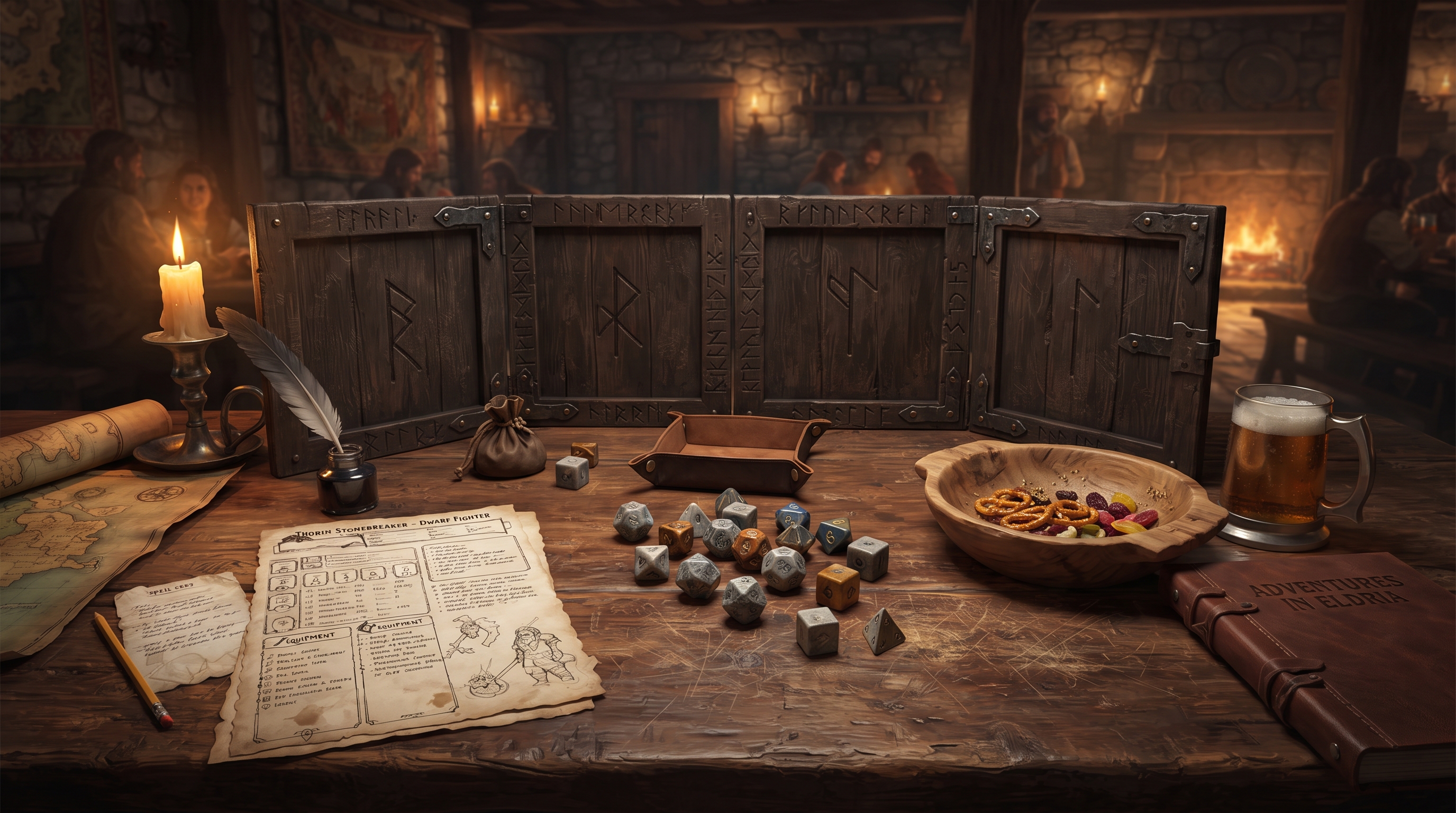
Picture this. Six months ago your party stormed a goblin fort, betrayed a duke, and adopted a war pig named Gerald. People showed up early every week. The group chat buzzed all week with theories about session twelve. Someone even made a fan map of the goblin fort in their spare time, which honestly should count as a form of love.
Then your DM had a baby. Two players switched jobs. Someone moved three states away. Now Gerald the war pig sits alone in a stable, and your campaign is dying a slow, quiet death that nobody scheduled a funeral for.
Sound familiar? Good news. You’re not broken, your group isn’t cursed, and your campaign isn’t over. You just ran into the boss fight nobody warns new DMs about. Not a lich. Not a dragon. Adulthood.
And here’s the part that makes it feel worse than it should: these disruptions rarely show up one at a time. One GM writing about a stalled campaign pointed out that a new job, a move, and a new baby tend to hit in the same general window of a person’s life, not politely spread out over a decade. That’s not bad luck. That’s just what your thirties look like. Knowing that ahead of time changes how you plan for it.
Here’s a number that stings a little. Forum threads on sites like EN World kicked around the idea that the average tabletop campaign lasts around six sessions. Six! Now, that number gets dragged down hard by all the campaigns that die in session one or two, so don’t panic and assume your fifty-session Curse of Strahd run is somehow below average. But the pattern underneath the number holds up. Most campaigns don’t die because the story got boring. They die because nobody built a plan for when real life showed up uninvited.
And real life shows up a lot. Player research shared by Wizards of the Coast found that 58 percent of players play weekly and 48 percent identify as millennials, which is a fancy way of saying most of this hobby is made up of people juggling jobs, mortgages, and toddlers, not teenagers with an open Tuesday night. The official published adventures don’t make it easier either. One estimate from the site Cosmic Draft puts a full campaign module at around 80 to 100 hours, which works out to something like six or seven months of weekly play. That’s a lot to ask real, messy, human schedules to stay out of the way of.
Here’s the twist. Did I fix this the first time I tried? Nope. Did it eventually work? Yeah, actually, once I stopped treating scheduling like an afterthought and started treating it like an actual game mechanic, one with its own rules and its own build.
So let’s build that mechanic. I’m calling it the Save Point Method: six checkpoints that keep your campaign breathing no matter how loudly real life yells at your table. Grab a snack, because this is the numbered list you didn’t know you needed.
1. Lock the Save Slot
Comic writer Kieron Gillen came up with a scheduling fix so good that half the internet quotes it without knowing where it came from. The rules fit on a sticky note. The DM picks one regular time. The game happens at that time with whoever shows up. The date only moves if the DM can’t make it, or if literally nobody else can either.
That’s the whole thing. No more group polls that drag on for a week. No more “does Thursday work for everyone” texts that die in silence somewhere between three yeses and one thumbs up emoji. Pick a slot, protect it the way a fighter guards a doorway, and let people opt in or out rather than forcing the entire party to agree every single time before anyone rolls a die.
2. Keep the World Moving in the Background
One of the sneakiest ways campaigns fall apart has nothing to do with scheduling at all. It’s what a DM blog called Ruckerworks calls static syndrome: what happens when your players leave a town, come back three sessions later, and find the same shopkeeper standing in the same spot with the same three job postings pinned to a board. Nothing moved. Nothing changed. The world starts to feel like a theme park where every ride resets the second nobody’s looking.
Fixing this solves two problems at once. Let a few NPCs age up, argue, or leave town while your party is off doing something else. Drop one line at the top of your next session, something like “three months pass, the trial finally happens, and the harvest festival gets canceled because of the flooding.” Your world feels alive again even during a break, and your players get a reason to want to come back and see what they missed.
3. Build a Respawn Point
You know that dead ten minutes at the start of every session where everyone squints at each other trying to remember what happened last time? That’s a respawn tax, and it gets worse after a long gap.
Kill it with a recap habit. Keep it low effort. A shared document with three bullet points per session works fine and takes about ninety seconds to write. I used to be the DM who promised to “remember it all” and then blanked on an NPC’s name in front of the whole table. Never again. Now I jot three lines the second a session ends, while it’s still clear in my head, and the next session starts in seconds rather than stalling out.
Typing that out sounds like a chore? Plenty of newer tools now handle this automatically. Apps like SessionKeeper and Archivist listen to your session and produce a summary, an NPC list, and a searchable history so nobody has to volunteer as the designated note taker again. Is it a little wild that software is now listening in on our dragon fights? Sure. Does it also solve the “wait, who was that merchant again” problem for good? Also sure.
4. Give Missing Players a Side Quest
Somebody’s going to miss a stretch of the campaign. A new job, a new baby, a move across the country, whatever it turns out to be, expect it. Rather than treating an absent player like a plot hole, give their character a reason to step offscreen for a while. Maybe they’re recovering from an injury. Maybe they got sent away on a mission the party hears about secondhand. Some tables even use bench players, extra folks who rotate in when a regular can’t make it, so the seat at the table never sits empty for long.
If someone’s away for a longer stretch, point them toward a solo journaling game like Ironsworn or Thousand Year Old Vampire. They can run a short side story for their own character on their own schedule, then bring the best moments back to the table whenever they return. It scratches the itch without demanding anyone find a free evening.
5. Change the Format, Not Just the Schedule
Sometimes the honest answer is that weekly three-hour sessions just don’t fit your group’s life anymore, and that’s fine. It doesn’t mean the campaign has to end. It means the format needs to change.
A lot of groups quietly move their game to Discord and run it as play-by-post, where people write short posts whenever they get a free ten minutes rather than showing up at a set time. One GM who writes about this approach points out that it works because nobody has to coordinate a calendar at all. Post once a day, and the story keeps moving even when nobody’s schedule lines up. It’s a different rhythm than a real-time session, sure, but a slower campaign that’s still going beats a faster one that quietly stopped six months ago.
You don’t need to pick one format forever, either. Plenty of groups run a hybrid setup: a full session once a month when everyone can actually gather, with a play-by-post thread carrying small character moments in between. Think of it like a JRPG’s overworld map versus its big dungeon crawls. The overworld keeps things moving at a relaxed pace, and the dungeon is where the whole party shows up for the main event. Nobody has to grind out weekly sessions to keep a story alive.
6. Know the Difference Between a Pause and a Quit
Here’s where a lot of groups mess up. They treat every busy month like a funeral, when it’s really just a pause screen. A campaign on hold for six weeks isn’t a dead campaign. A campaign nobody has scheduled a return date for in eight months could be.
Set a soft check-in date before you go on hiatus. Something as basic as “let’s touch base again in October” keeps the game alive in everyone’s head even when nobody’s picking up dice. When you do come back, don’t just jump straight into combat. Spend a few minutes on a quick recap, let players remind each other of loose threads, and ease back in rather than expecting everyone to remember every clue from four months ago.
The Part Nobody Talks About: DM Burnout
Quick pivot, because scheduling isn’t the only monster in this dungeon. Sometimes a campaign isn’t dying because of life outside the game. It’s dying because the DM is running on empty from prepping it.
Mike Shea, who runs a blog called Sly Flourish, built a whole method around this problem. His approach gets session prep down to around thirty minutes by focusing only on a strong opening scene, a handful of locations, and a few NPCs, rather than scripting out every possible path the players could try. You are not required to write a novel every week. Your players will forgive a loose plot here and there. They will not forgive a DM who quietly burns out and disappears without a word.
If prep is eating your free time, that’s worth fixing before it becomes the reason the whole game stops. Set a timer. Pick three things to prep, not ten. Reuse a map you’ve already made. The campaign doesn’t need more of your hours. It needs you to still want to show up on a Tuesday night.
Wrapping This Up
Your campaign isn’t going to die because life happened. Life always happens. Jobs change, people move, babies arrive at the worst possible moments, and none of that means your table failed. It means you’re adults playing an adult hobby, and that was always going to come with some chaos built in.
What actually kills campaigns is silence. No plan for scheduling, no plan for the world between sessions, no plan for absent players, no plan for a format that fits your current life, and no plan for coming back after a break. Fix those five things and your campaign can survive almost anything real life throws at it, including the arrival of an actual human baby.
So here’s your homework. Pick one checkpoint from the Save Point Method and put it in place before your next session. Lock a regular time. Start a one-line recap habit. Give your missing player a side quest, not a guilt trip. Small moves like these are the difference between a campaign that fades out without anyone noticing and one your group is still bringing up ten years from now.
Now go tell your party Gerald the war pig is fine. He’s been running a small farm this whole time. Drop it into your recap. You’re welcome.
Got your own trick for keeping a campaign alive through a busy season? Drop it in the comments below. The next DM staring down a scheduling disaster could need exactly what worked for you.

Posted on August 25, 2026, in Blog. Bookmark the permalink. Leave a comment.





 Rokk Talk
Leave a comment
Comments 0