The 10-Second Map Trick for When Players Go Somewhere You Didn’t Plan
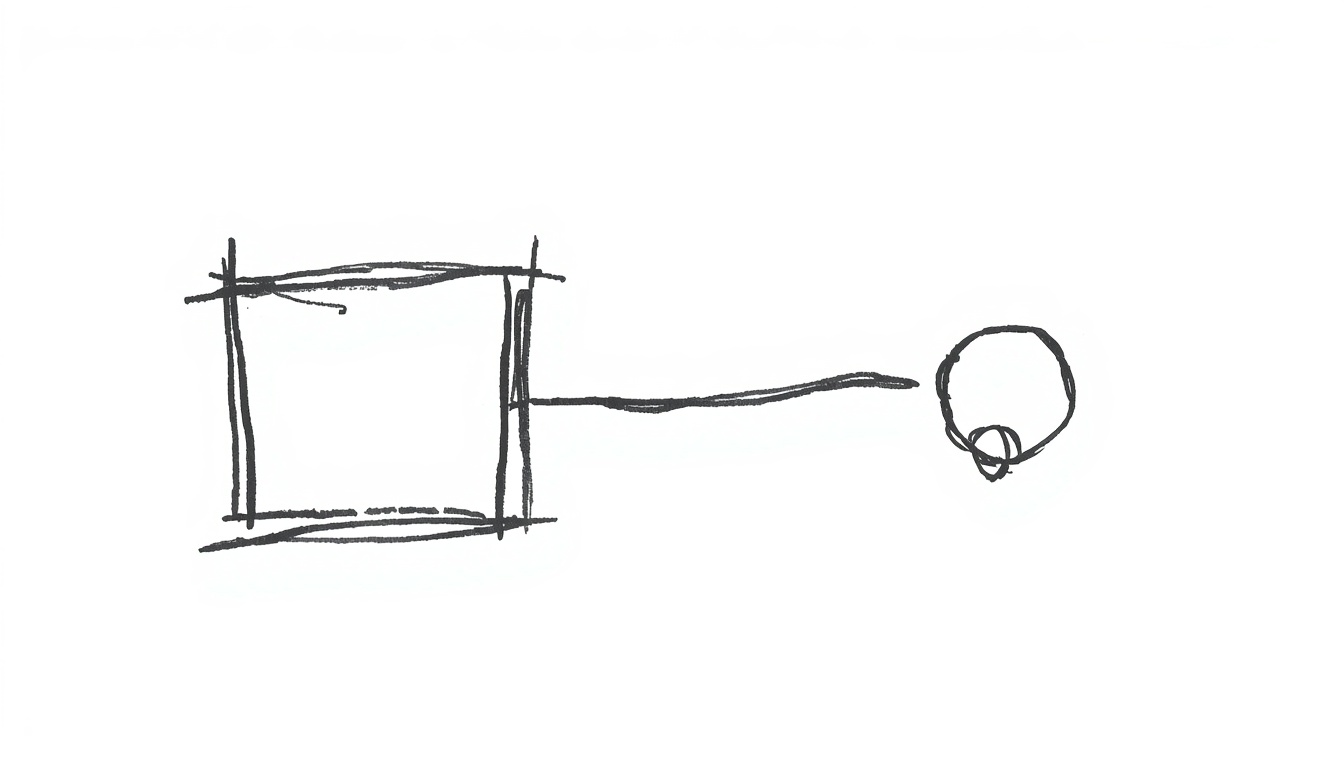
Your players just walked past the tavern you spent two hours writing. The one with the secret basement. The one with the ledger that ties into three future plot hooks. They walked right past it and knocked on the door of a random house you invented on the spot thirty seconds ago because someone said “let’s check that place instead.”
Guess what? That house needs a floor plan now. Immediately. Your brain has maybe two seconds before someone asks “okay, what do we see when we walk in?”
This is the moment every GM fears. It’s also the moment that separates a fine session from one your table talks about for years. And the fix isn’t more prep. It’s a ten-second trick you can use at literally any table, with zero art skill, and zero fancy tools.
Let’s fix this.
Why More Prep Doesn’t Save You
Here’s the trap almost every new GM falls into: you think the answer to “players go off script” is to prep for every possible direction. Prep the tavern. Prep the alley behind the tavern. Prep the sewer under the alley. Prep the guy who lives in the sewer, just in case.
Did that work? Not really. In one forum thread, a GM described spending two to three hours building battle maps just so they’d have something ready “if they decide to go somewhere else.” That’s real hours spent on content that might never get touched. And a Sly Flourish poll of 3,663 dungeon masters found that 29% spend three hours or more prepping a single four-hour game, while only 10% spend thirty minutes or less. A third of the room is burning half a workday on a session that could still get derailed in the first ten minutes.
So no, over-prepping isn’t the answer. You cannot out-prep a group of five players who collectively have the plot-defeating instincts of a heat-seeking missile pointed directly away from your plans. It is not possible. Give up now. It’s freeing, honestly.
What you actually need is a method that works when you have nothing.
Enter the 10-Second Map Trick
Here’s the whole method in one sentence: three shapes and a line, drawn in real time while you talk.
That’s it. No grid paper, no Sharpie collection, no Dyson Logos symbol key memorized front to back (though credit where it’s due, that key is still one of the best cheat sheets for making rooms look good fast). You just need a pen, a napkin, a whiteboard, or even just your words if you’re playing over voice chat with no camera.
Here’s how it breaks down:
Step one: draw the box. A room is a box. A cave is a wobbly circle. A ship deck is a long rectangle. You have three shapes total and you are allowed to use only these three for the rest of your GMing life. This isn’t a puzzle. It’s a permission slip.
Step two: draw one exit. One door, one hallway, one hole in the wall. Just one line leaving the shape. You are not building the whole dungeon right now. You’re building the next ten seconds of gameplay.
Step three: drop in one feature. A table. A statue. A weird stain on the floor. Pick literally anything and commit to it mattering. One improv essay put this well: pause for three seconds, ask yourself what would actually happen here, then answer. Three seconds feels like an eternity to you and reads as a dramatic beat to your players. Use that pause to pick your one feature.
Box. Exit. Feature. Done. That’s your ten seconds.
Notice what you didn’t do. You didn’t draw the whole building. You didn’t figure out where the secret door is, what’s for sale, or who owns this place. You bought yourself exactly enough time and exactly enough content to survive the next thirty seconds of play, and not one second more. That’s the entire trick. It’s a boss fight you can win by only fighting the part of the boss currently attacking you.
Why This Works (The Actual Design Logic)
Okay, quick tangent into game design land, then we’re right back to the fun part, I promise.
The reason this works is that a map doesn’t need to be finished to be useful. It needs to answer one question: what can my players interact with right now? That’s it. One GM mapping technique that’s grown a cult following uses index cards laid out on the table, and when players find a new hallway mid-session, the GM just slides a new card into the gap. The map grows exactly as fast as the players explore it, and not one card faster. That’s the whole philosophy behind the ten-second trick too. You’re not drawing a dungeon. You’re drawing the next card.
Compare that to the ICRPG crowd, who literally started this whole approach as “silly Sharpie drawings” back in 2011, built by a GM who wanted something that could survive the pressure of running a real game every single week. The point was never pretty art. The point was speed and clarity.
And if you’re worried you can’t draw, congratulations, neither can most GMs using this method. A box is not art. A wobbly circle is not art. Nobody has ever complained that a GM’s cave sketch wasn’t gallery quality. Players want information, not an illustration.
The Mid-Session Save: A Quick Story
Picture this. You’re three sessions into a homebrew campaign. You’ve built an entire noble district for the players to investigate, complete with three suspects and a timeline of events. Instead, one player rolls a nat 20 on a random perception check and spots a hatch in the sewer grate they were walking over on the way to said noble district.
“We open the hatch,” they say.
You have nothing. You had never planned a sewer. There is no sewer in your notes.
This is exactly the situation the ten-second trick exists for. Box: a narrow tunnel. Exit: it curves left into darkness. Feature: the walls are scratched, deep gouges, like something big has been dragging itself through here for a long time.
That’s it. That’s a hook, a mood, and a next decision point, built in the time it takes to say the sentence out loud. Now your players are choosing whether to follow the scratches or turn back, and you’ve got another ten seconds before you need the next box.
This is the improv skill that separates GMs who dread going off script from GMs who kind of secretly hope their players wander somewhere unplanned, because that’s where the best stories tend to come from anyway.
Leveling This Up (Optional, But Fun)
If the basic three-shape method feels good and you want the next tier of the tool, here are two upgrades. Neither is required. Think of these as the side quests, not the main story.
Upgrade one: the pointcrawl mindset. Instead of thinking in exact distances and fully mapped-out floors, think in points connected by lines, the way a subway map works. One point equals one location. A line means “these two places connect somehow.” This is easier to prep loosely and easier to improvise, because you don’t have to know what’s between two points until your players actually walk there. Compared to something like a hexcrawl, where every single hex on the map technically needs content, a pointcrawl only asks you to fill in the dots your players actually visit.
Upgrade two: the permission slip table. Keep a short table of three or four random details, monster types, loot, weird smells, anything, and roll on it when you freeze. One GM advice piece described random tables as exactly this: permission slips. You roll, you commit to the result being true, and then you ask yourself how it connects to what’s already happening. This takes the ten-second trick from “I drew a box” to “I drew a box and something genuinely surprising just happened inside it,” which is often even more memorable for your table.
Neither upgrade replaces the core trick. They just add flavor once you’ve got the basic reflex down.
The Mistake to Avoid
Here’s the trap on the other side of this coin. Don’t try to make your ten-second sketch permanent or perfect. The whole point is that it’s disposable and fast. If you start second-guessing the shape of the room, erasing it, redrawing it with better proportions, you’ve lost the entire benefit. Speed is the feature, not a compromise.
Also, don’t over-explain what you drew. You don’t need to narrate every wall texture and shadow. One box, one exit, one feature, said out loud in a sentence or two, is plenty. Your players’ imaginations will fill in the rest, and honestly, their version is probably cooler than whatever you were going to add anyway.
Wrapping This Up
So here’s the actual takeaway, in case you skipped straight to the bottom (no judgment, we’ve all done it). You cannot prep your way out of players going somewhere unplanned. You can, however, train yourself to draw exactly enough map to survive the next ten seconds of play, using nothing but a box, one exit, and one feature. That’s the whole trick. No art degree, no fancy tools, no six-hour prep binge required.
Next session, when your players inevitably ignore your carefully planned route and wander into the one building you never thought about, don’t panic. Grab a napkin, draw the box, and give them one exit and one weird detail to react to. Then breathe, because you just bought yourself the next ten seconds, and that’s really all a GM ever needs.
Try it at your next table. Then come back and tell me what your players found behind that door you weren’t ready for. I guarantee it’s better than whatever you would have prepped anyway.

Posted on July 27, 2026, in Blog. Bookmark the permalink. Leave a comment.





 Rokk Talk
Leave a comment
Comments 0