How to Make a Holiday One-Shot Matter to Your Main Campaign (Without Breaking Canon)
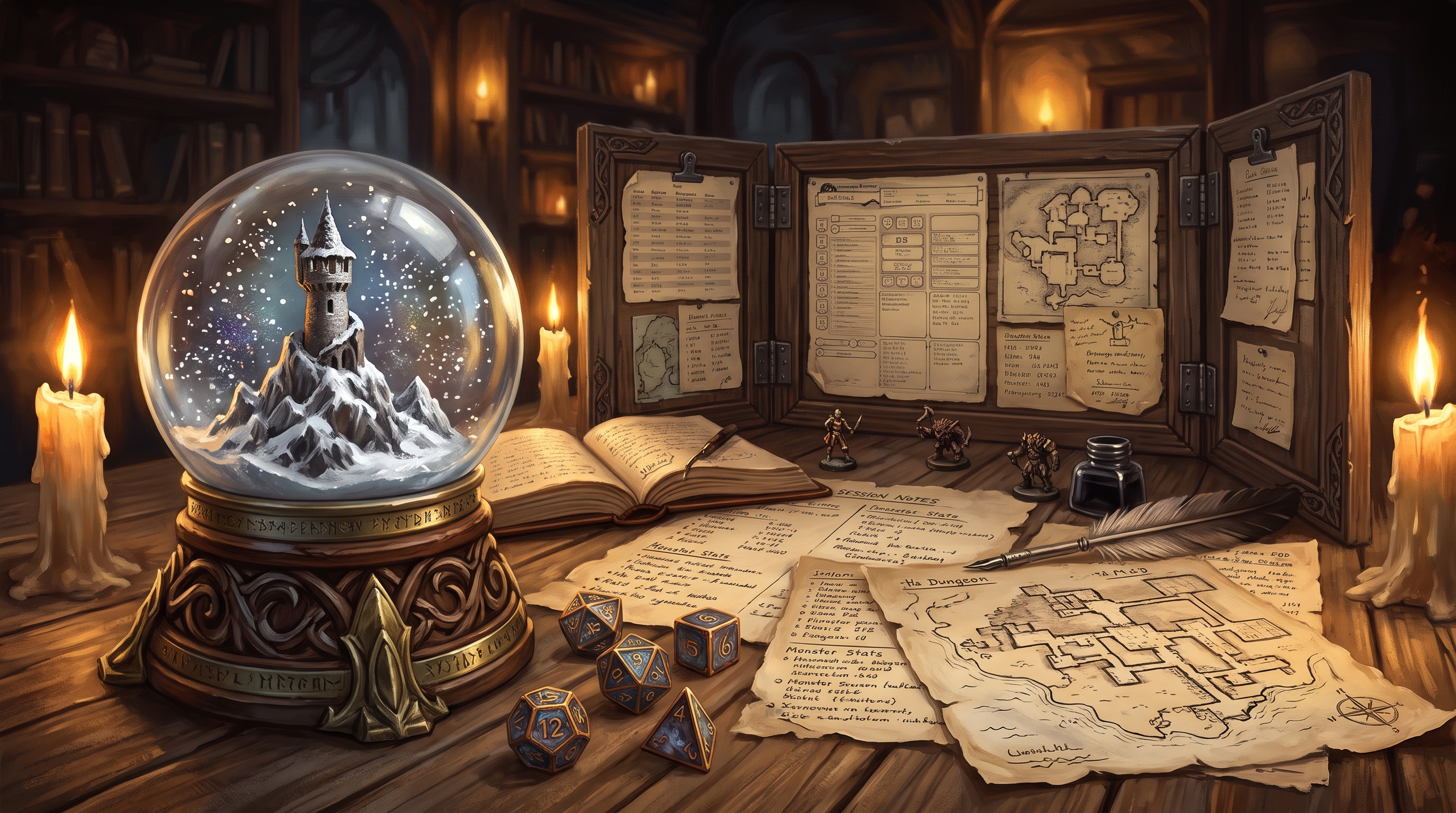
Every December, the same thing happens at my table. Half the players are traveling. The other half are full of cookies. So I run a holiday one-shot, everybody laughs at the candy cane golem, and then January shows up and nobody ever mentions it again.
Three hours of play. Gone. Deleted from the timeline like a corrupted save file.
Stay with me here, because that loss is bigger than it sounds. Survey data rounded up by Geek Native shows at least half of roleplayers get a weekly game, and most play about five hours a week. So a holiday special doesn’t cost you one random evening. It costs your group a whole week of play. Spending that on pure filler? Rough.
Look, I get why we do it. Holiday sessions feel risky. What if your favorite PC dies to a gingerbread man? What if someone walks away with a magic item that breaks the next boss fight? What if Santa crashes your grimdark campaign about plague and taxes? So we play it safe, call it non-canon, and throw it away.
Guess what? You don’t need to pick between “safe and pointless” and “canon and chaotic.” This guide walks you through a simple system. Set a canon dial before anyone rolls. Send exactly three leftovers home to the main campaign. Pay them off by February. Your holiday one-shot gets to matter, your timeline stays intact, and everybody wins. Except the gingerbread man. He loses. Badly.
Why Holiday Specials Feel Like Throwaway Filler
Blame television. TV Tropes points out that the classic Christmas episode of a long-running show usually sits outside the main continuity. It’s a bonus round. The writers expect casual viewers to tune in, so they keep the lore light and the stakes low.
Most GM advice copies that blueprint. One Game Rant holiday guide flat out admits a holiday one-shot probably “won’t continue over the long haul.” That’s the default setting for most tables, and it’s why your special plays like a seasonal MMO event that drops a funny hat and nothing else.
In my experience, three fears keep GMs stuck there:
- Death. Nobody wants their main character to die in a snowball fight.
- Loot. One magic item from a goofy one-shot can wreck your balance for months. A DM on the D&D Beyond forums once ended a level 20 Christmas game by handing out a Deck of Many Things. Hilarious that night. In a real campaign? Nobody likes you. Sorry. Those are the rules.
- Contradiction. If the party met the Winter Queen in December, does that mess up your plans for her in Act 3?
Each fear is real. None of them means you need to throw the session away. You just need rules, and you need them before the dice come out.
Step 1: Set the Canon Dial Before Anyone Rolls
Here’s the big fix. Canon isn’t an on/off switch. It’s a dial, and you set it before the first die hits the table.
The most famous D&D show on the internet already works this way. According to its episode list on Wikipedia, some of its one-shots sit in the official timeline, some take place in the same world with familiar characters but don’t count, and some don’t connect at all. Steal that idea for your home game. Pick one of these four settings and tell your players out loud:
- Hard Canon. It happened. Full stakes. Deaths stick, loot sticks, and the world changes. Best for groups who want the holiday arc to feel like a real chapter.
- Soft Canon. It happened, but only the story carries over. No deaths, no stat changes, no permanent power. This is my go-to for most tables.
- Legend. The session is a tale told at the in-world winter feast. It’s “true-ish.” Details can be wrong, so it can never contradict your plot. Bards love this one.
- Snow Globe. Totally non-canon, except one object survives the trip home. Think dream sequence with a receipt.
Which one should you pick? Soft Canon, nine times out of ten. Is that a cop-out? Nope. Well, actually, it kind of is. But it’s the good kind of cop-out.
Bonus trick: decide what counts after the session. Run it as Soft Canon, then at your next game let the table vote on which moments get promoted to Hard Canon. Players who loved that scene with the grumpy toymaker get to keep it. The scene where the rogue licked a frozen flagpole quietly disappears. Democracy!
Step 2: Use the Leftovers Rule (One NPC, One Question, One Object)
This is the method. Write it on a sticky note. Tape it to your GM screen.
Every holiday dinner sends you home with leftovers. Your holiday one-shot should too. Not the whole turkey. Just a plate. Every special sends exactly three things back to the main campaign:
- One NPC. A character the players met and liked (or loved to hate). Example: Marta, a tired gnome toymaker who won’t stop complaining about her workshop union. Months later, she shows up in the capital selling secrets.
- One Question. A mystery the session raised but didn’t answer. Example: why did the frost spirits carry the same sigil as the cult from Act 1? Nobody answers it on the night. That’s the point.
- One Object. Something the party carries home. Example: a snow globe that shows a city the players never visited. Spoiler: they will.
Now the rule that holds it all together. None of the three may change the party’s power curve. No +2 swords. No free levels. No bonus wish. The NPC can’t be a combat pet. The object should be weird, useful in roleplay, maybe a puzzle key, but never a stat boost.
Why so strict? Two reasons. First, it shuts down loot leakage for good. Second, it protects the players who missed the session. Tribality’s holiday guide sets the bar here: make sure “missing players don’t get mad that their PCs are missing out on experience points.” Story leftovers dodge that problem completely. Your absent player can’t be jealous of a riddle.
Video game brain version: the holiday special is a seasonal event. It drops a cosmetic and a quest hook. It does not drop the raid weapon.
(Confession: I wrote this whole section while eating actual leftover pie. Focus, me.)
Step 3: Pick a Festival Your World Already Celebrates
Santa doesn’t need to crash your fantasy setting. Your world can host its own holiday, and that holiday becomes canon the second you put it on the calendar.
Running a game in Faerûn? The Calendar of Harptos hands you five yearly festivals: Midwinter, Greengrass, Midsummer, Highharvestide, and the Feast of the Moon. Pick the one that fits your campaign’s mood:
- Feast of the Moon honors ancestors and the dead. Perfect for horror or grief-heavy campaigns. Picture the party’s fallen mentor showing up as a ghost guest at the feast table, holding a warning nobody wants to hear.
- Midwinter is about alliances and deals. Perfect for political games. A treaty dinner that goes horribly wrong? Yes, please.
Homebrew world? Invent one. It works. The Adventure Zone’s Candlenights started as a running joke on a comedy podcast, and CBR notes it ended up celebrated inside the Balance campaign itself. If a joke holiday can become canon, your solstice festival can too.
One golden rule: match the holiday to the campaign, not the campaign to the holiday. Grim world, grim holiday. Silly world? Go wild.
Step 4: Run It at Current Level (Yes, Even Flashbacks)
Here’s a classic forum headache. A GM on D&D Beyond wanted a flashback to the days before the party met, but worried a level 5 group would hate going back to level 1 combat. Fair. Level 1 combat after level 5 feels like trading your epic mount for a tricycle.
The fix is simple. Run the special at the party’s current level, with their real character sheets. If it’s a flashback, use the Legend setting from Step 1. The story is being told years later, so naturally the heroes sound stronger than they were. Bards exaggerate. That’s their whole job.
Bonus: players get to show off the abilities they just unlocked in a low-pressure fight. That one detail does a lot of work. When the wizard drops her brand-new fireball on a pack of evil nutcrackers, the night stops feeling like a side game and starts feeling like her campaign.
Step 5: Build the BBEG’s Case File From Your Session Notes
This one is my favorite trick, and I stole it fair and square. The free Krampusnacht adventure from Story Engine builds Krampus’s list of crimes from what the party really did in past sessions, using “the group’s actual mischief as Krampus’s ammunition.”
You can do that with any holiday antagonist. Krampus, a frost hag, a tax collector in a festive hat. Open your session notes and grab the party’s worst moments:
- The shopkeeper they stiffed in session 4
- The barn that “accidentally” burned down
- The bribe the rogue swears never happened (he’s a naughty boy, and Krampus knows it)
Read the charges out loud at the start, like a courtroom drama with more tinsel. Players will argue. They’ll defend their past selves. They’ll blame each other. It’s beautiful.
Now, guess what you just made? A recap. Players coming back after a month off get a “previously on” segment, wrapped in a trial they badly want to win. Filler can’t do that.
Step 6: Pay It Off by February
A leftover only matters if someone eats it. Bring at least one of your three leftovers back within two to four sessions. Wait longer and players forget. Wait forever and the special turns into filler anyway.
TV gets this right when it tries. Speculative Chic describes Doctor Who’s holiday episodes as a mix of season-finale-level stakes and filler that keeps fans busy between seasons. The specials people remember are the ones that set something up.
Your version looks like this. Session three of the new year, the party walks into the thieves’ guild, and there’s Marta the gnome toymaker behind the counter, still complaining about her union. Your players scream. You win.
Pro tip: write the payoff session number next to each leftover in your notes. Circle it. Future you will thank present you.
Bonus: Let Someone Else Run It
Forever GMs, this one’s for you. Gnome Stew floats the idea of a holiday adventure set in your world but run by one of your players. Pair that with Soft Canon and the Leftovers Rule, and you keep veto power over what comes home.
You get a night off. You get to play a character for once. The world keeps moving. And nobody touches your BBEG without permission.
Holiday One-Shot FAQ
Should a holiday one-shot be canon?
Usually, yes, at Soft Canon. The story carries over, the risk doesn’t. Save Hard Canon for groups who want real stakes and say so out loud.
Can I use my main campaign characters?
Yes. Use their real sheets at their current level. That alone makes the session feel connected to everything else.
What happens if a character dies?
Only Hard Canon deaths stick. Tell players the setting before the first roll so nobody feels tricked when the evil snowman lands a crit.
Do players keep loot and XP?
Under the Leftovers Rule, the party keeps one weird object and nothing that boosts their stats. Skip XP so absent players don’t fall behind.
How do I run a Christmas one-shot in a world without Christmas?
Swap in an in-world festival like Midwinter or the Feast of the Moon, or invent your own. Then add it to the campaign calendar so it comes back every year.
How long should a holiday one-shot be?
One session of three to four hours. Most published holiday one-shots in this roundup of D&D Christmas adventures land in that range.
Your Holiday One-Shot Deserves Better Than the Trash Bin
So, does your holiday special need to be filler? Nope. Not even a baby bit.
Here’s the whole system in one breath:
- Set the canon dial before anyone rolls.
- Pick a festival your world already celebrates.
- Run it at current level, with real character sheets.
- Build the antagonist’s case file from your session notes.
- Send home one NPC, one question, and one object.
- Pay one off by February.
That’s it. No broken timeline. No ruined balance. No sad player who missed out on a +3 axe because their flight got delayed. Just a December session that your table will still talk about in July.
And hey, if this sounds like a lot of planning for a night about killer snowmen? Fair. I complained the entire time I wrote it. Then I pictured my players’ faces when Marta the toymaker walks back into the story, and I got over it fast.
Your move: grab a sticky note right now and write down your three leftovers for this year’s holiday session. Then share them in the comments. The best one gets stolen for my own table. Fair warning.

Posted on November 23, 2026, in Blog. Bookmark the permalink. Leave a comment.





Leave a comment
Comments 0