The Save Point Method: How to Keep Your RPG Campaign Alive When Life Won’t Cooperate
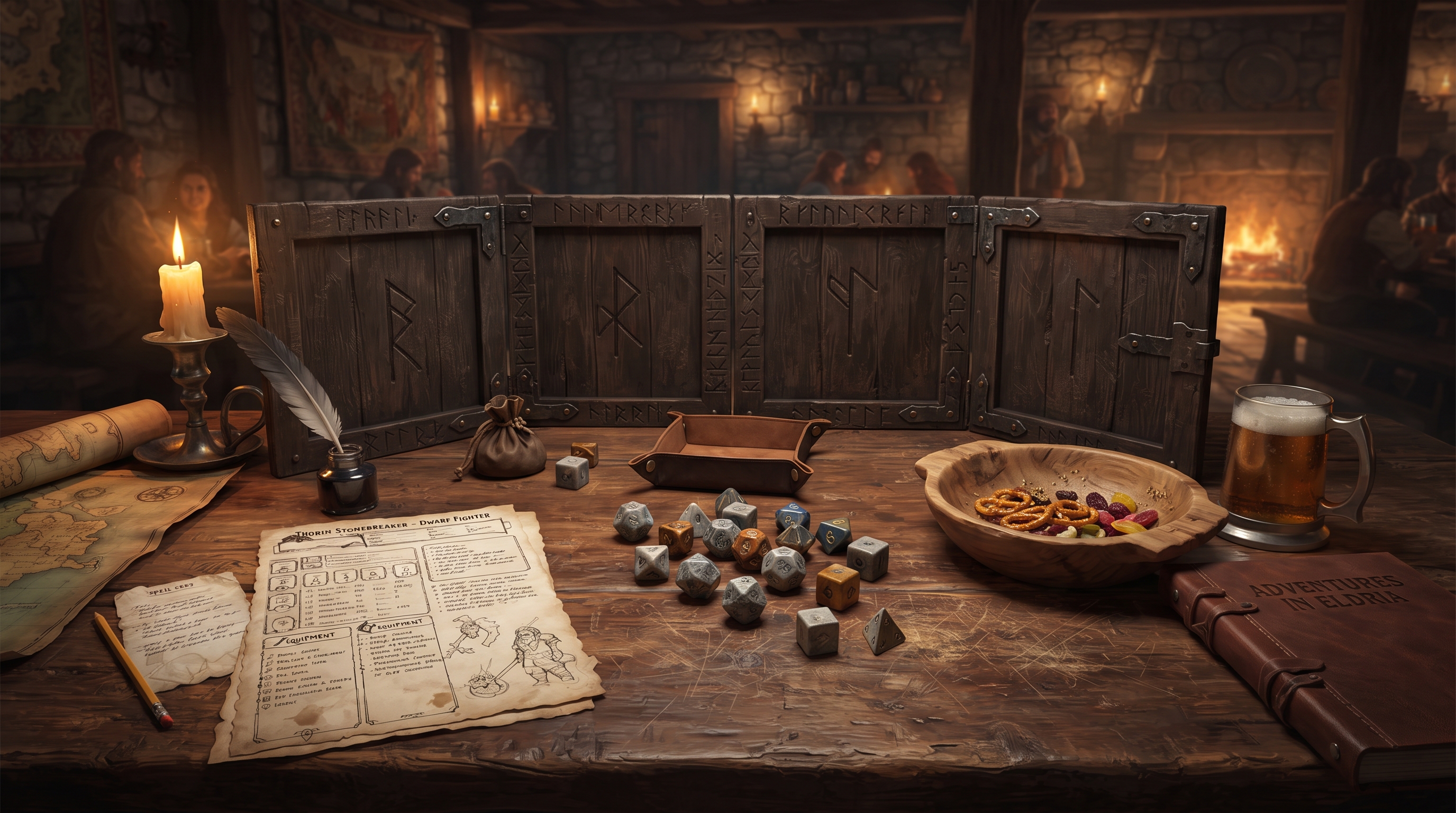
Picture this. Six months ago your party stormed a goblin fort, betrayed a duke, and adopted a war pig named Gerald. People showed up early every week. The group chat buzzed all week with theories about session twelve. Someone even made a fan map of the goblin fort in their spare time, which honestly should count as a form of love.
Then your DM had a baby. Two players switched jobs. Someone moved three states away. Now Gerald the war pig sits alone in a stable, and your campaign is dying a slow, quiet death that nobody scheduled a funeral for.
Sound familiar? Good news. You’re not broken, your group isn’t cursed, and your campaign isn’t over. You just ran into the boss fight nobody warns new DMs about. Not a lich. Not a dragon. Adulthood.
And here’s the part that makes it feel worse than it should: these disruptions rarely show up one at a time. One GM writing about a stalled campaign pointed out that a new job, a move, and a new baby tend to hit in the same general window of a person’s life, not politely spread out over a decade. That’s not bad luck. That’s just what your thirties look like. Knowing that ahead of time changes how you plan for it.
Here’s a number that stings a little. Forum threads on sites like EN World kicked around the idea that the average tabletop campaign lasts around six sessions. Six! Now, that number gets dragged down hard by all the campaigns that die in session one or two, so don’t panic and assume your fifty-session Curse of Strahd run is somehow below average. But the pattern underneath the number holds up. Most campaigns don’t die because the story got boring. They die because nobody built a plan for when real life showed up uninvited.
And real life shows up a lot. Player research shared by Wizards of the Coast found that 58 percent of players play weekly and 48 percent identify as millennials, which is a fancy way of saying most of this hobby is made up of people juggling jobs, mortgages, and toddlers, not teenagers with an open Tuesday night. The official published adventures don’t make it easier either. One estimate from the site Cosmic Draft puts a full campaign module at around 80 to 100 hours, which works out to something like six or seven months of weekly play. That’s a lot to ask real, messy, human schedules to stay out of the way of.
Here’s the twist. Did I fix this the first time I tried? Nope. Did it eventually work? Yeah, actually, once I stopped treating scheduling like an afterthought and started treating it like an actual game mechanic, one with its own rules and its own build.
So let’s build that mechanic. I’m calling it the Save Point Method: six checkpoints that keep your campaign breathing no matter how loudly real life yells at your table. Grab a snack, because this is the numbered list you didn’t know you needed.
Read the rest of this entryThree Tricks for Making Villains Feel Alive Between Sessions
My best villain died of neglect.
Nobody killed him. There was no duel, no clutch nat 20, no tearful monologue on a collapsing tower. He just sat in my notes for eleven weeks while the party ran a fishing subplot, and when I finally brought him back for his big reveal, my rogue squinted at me and said, “Wait. Who?”
Who. WHO. I spent four hours on that man. I gave him a dead sister. I gave him a signature coat. I gave him a hat, and my players looked at me like I’d wheeled in a stranger.
So let’s get the uncomfortable part out of the way early. Your villain is probably fine. The motive is fine, the backstory is fine, the voice you do is fine (it’s a little much, but it’s fine). The problem is that your villain only exists on the nights you say his name out loud. The other six days of the week he’s in a drawer, and your players are living their actual lives, and a guy in a drawer cannot compete with a guy’s kid’s soccer practice.
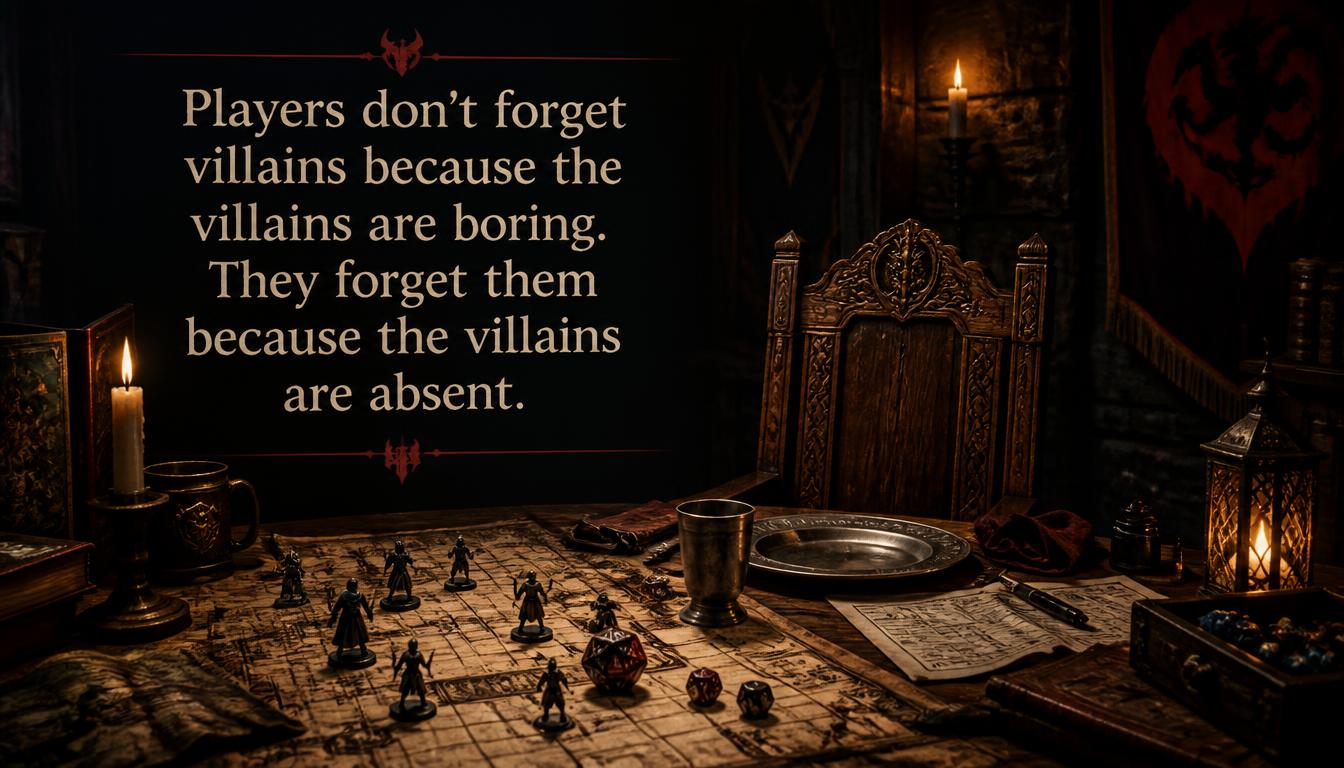
Players don’t forget villains because the villains are boring. They forget them because the villains are absent.
Good news: that’s a scheduling problem, not a writing problem. Which means you can fix it in about ten minutes a week. Stay with me.
Read the rest of this entry





 Rokk Talk