When to Kill an NPC (and When Not To)
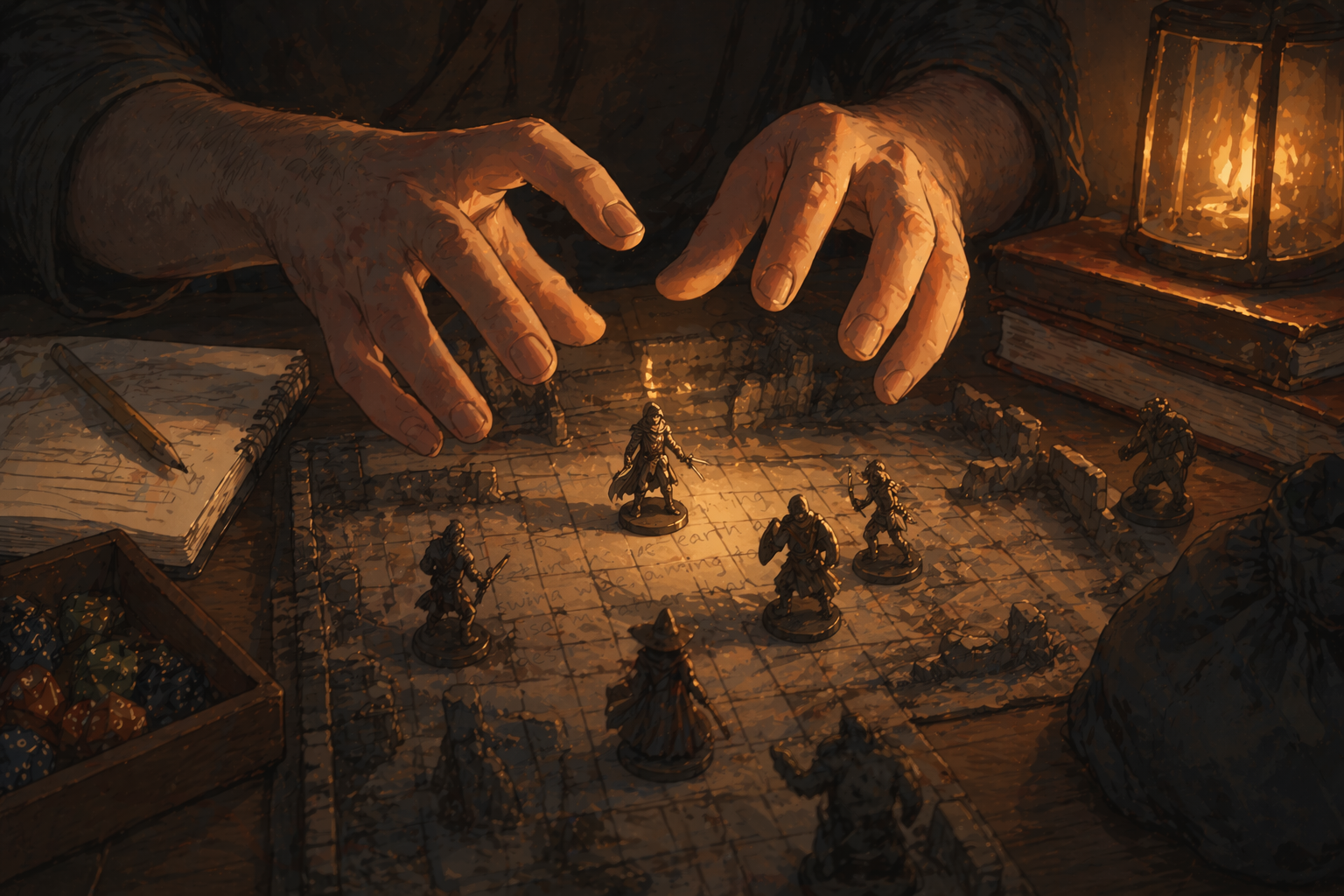
I killed one of my favorite NPCs once. Not because the story demanded it. Not because the villain earned it. Because I had written myself into a corner and I didn’t know how else to get out.
The table went quiet. A player set down their pencil. Someone said “okay” in that flat voice that means it’s definitely not okay. And I sat there realizing that I had just spent six sessions building someone they actually cared about, and then burned that person down like a barn full of hay because I ran out of ideas for what to do with them next.
That is not a storytelling choice. That is a GM having a bad night and using narrative death as a trapdoor.
Here’s the thing nobody says out loud about NPC deaths: players are not upset because the character died. They are upset because it didn’t feel fair. And “fair” in D&D doesn’t mean soft — it means the fiction earned it. It means they had a chance, even if they failed. It means the death felt like it came from the world and not from the DM getting bored. When an NPC death lands wrong, it’s almost never a pacing problem or a story problem. It is a trust problem.
So let’s talk about that.
You Have to Build Them to Break Them (But Most GMs Skip This Part)
There’s an uncomfortable prerequisite before you start your murders. If your players don’t care about an NPC’s death, you didn’t build the investment first. You can kill any character with perfect dramatic timing and it will land like a wet paper bag if the players never had a reason to be attached to them.
The work of making an NPC death matter happens three to five sessions before you decide to kill them. Not the session of the death. Not the session before. Three to five.
Research into video game narrative design has consistently shown that players develop meaningful attachments to NPCs when those characters have persistent memory, unique reactions to player choices, and a demonstrated stake in the outcome of events. The same psychology applies at the table. Your players aren’t going to mourn Aldric the Blacksmith because he has a sad backstory you know about. They’ll mourn him because he remembered the name of the ranger’s horse, and once covered for the rogue when the town guard came asking questions, and made a joke at the druid’s expense that the whole table laughed at.
That’s the investment. The small, consistent, human stuff. And you cannot shortcut it.
If you are planning to kill an NPC and you cannot name three moments where that character mattered to the players specifically — not to the story, to the players — you are not ready. Do more sessions first. Or kill a different NPC. Or don’t kill anyone.
When to Kill an NPC
Let’s say you’ve done the work. The NPC has weight. The players would notice if they were gone. Here are the three situations where death is the right call.
One: When the death is a consequence, not a punishment.
There is a massive difference between a consequence and a punishment. A consequence comes from the fiction. The players decided to confront the villain directly instead of sneaking in, and in the chaos, the NPC they brought with them didn’t make it out. That’s a consequence that came from a choice the players made, in a situation where they had information about the risks. A punishment is when the GM decides the players have been having too easy a time and someone needs to die to remind them that the world is dangerous. Players can feel the difference. They always can.
The best NPC deaths I have ever seen at tables were the ones where the players, when it happened, immediately looked at each other and said “we should have seen that coming.” Not “that was unfair.” Not “the GM did that to us.” We should have seen that coming. That reaction is the gold standard. It means the death came from the world.
Two: When you give them a real chance to prevent it.
This is the piece of advice buried in places like the D&D Beyond forums that deserves to be said louder: give the players a chance to save the NPC, even if they fail.
The 2024 Dungeon Master’s Guide quietly validates this. It warns against making NPCs feel like tools used against the players rather than people existing in the world alongside them. The way you avoid that feeling is agency. The players tried to get to them in time and didn’t make it. The players made the call to prioritize something else and now have to live with it. Those outcomes hurt in a good way. “The GM decided the NPC was going to die no matter what” just hurts.
Three: When the death changes something going forward.
An NPC death that doesn’t change the shape of the campaign is not a story beat. It is a deletion. If the world looks exactly the same six sessions after the death as it did the session before, you didn’t kill a character. You just removed a piece from the board.
The best deaths create a gap. A mentor dies, and the players realize they’ve been relying on guidance they now have to generate themselves. A rival dies, and the players find out they actually liked having someone to measure themselves against. A comic relief character dies, and the table notices how much lighter things feel with them around. The death has to do something to the ongoing fiction, or it was just sad for its own sake, which — to be extremely clear — is not a virtue.
When Not to Kill an NPC
There is an alternative to death. And most of the time, death is the lazy choice.
Don’t kill them — break them instead.
The most interesting thing you can do to a beloved NPC is not kill them. It’s change them in a way that forces the players to confront who that character was to them. A mentor who loses faith. A companion who makes a choice the players would never make. A villain who used to be someone they trusted.
These hit harder than death for two reasons. First, they’re reversible. The players might be able to get that person back, which means they have something to fight for that feels personal. Second, they’re ongoing. A death is a single moment of grief. A person who has been fundamentally changed by events the players failed to prevent is a wound that can keep surfacing for the rest of the campaign.
I have watched players spend a full two-hour session trying to talk a changed NPC back to who they used to be. I have never watched players spend two hours grieving a dead one. The broken character creates active emotional investment. The dead one creates a memorial and a memory.
Don’t kill them — remove them in a way that could be undone.
Capture. Disappearance. A curse that turns them into something unrecognizable. An obligation that takes them somewhere the players can’t follow right now. These are all endings that aren’t endings, and they’re more useful to a living campaign than a gravestone.
Mike Shea, who has been writing DM advice as Sly Flourish for years, makes a point about NPC betrayal that applies equally here: do it too often, and players stop investing in any NPCs at all. They learn the lesson you’re teaching. If beloved NPCs keep dying in your campaign, players will protect themselves from the grief by simply not getting attached. At that point, you’ve destroyed the exact thing you were trying to use.
Don’t kill them — let the balance problem teach you something about your design.
There’s another problem a lot of GMs won’t admit to. Sometimes we kill NPCs because they have become too powerful and we don’t know how else to fix it. The party leans on them too hard. They’re solving problems the players should be solving. And instead of addressing the design failure, we write the character out of the story the fastest way we know how.
If you feel like you have to kill an NPC to restore mechanical balance, you built the NPC wrong. Death is a band-aid on a structural wound. This is exactly why I designed a companion system into my Pathfinder campaign. The NPC can take actions and affect combat, but just a little. He is designed to never overshadow the players. Build the NPC that way from the start, and you never end up in the position where death is the only fix.
Three Questions Before You Pull the Trigger
Before you kill an NPC, ask yourself these three things.
First, can I name three moments in this session where the players demonstrated that they care about this character? Not where you care about them. Where the players do. If you can’t name three, wait.
Second, will the players have had a real chance to prevent this, or will it feel like it happened to them? If the answer is the latter, redesign the moment so they have agency, even if the outcome is the same.
Third, is death actually the most interesting thing I can do here, or am I choosing it because it’s the easiest? If you sit with that question honestly, you’ll find that “break them instead of killing them” is almost always the more interesting answer.
Death in your campaign should feel like a wound from the world, not a decision from the GM. The players should be able to trace it back to a choice, a moment, an action — something that came from the fiction, not from the person running it. When it lands that way, it’s one of the most powerful things a campaign can do. When it doesn’t, you get the sound of someone setting down their pencil.
That sound is avoidable. Most of the time, it’s on us.
Go build an NPC worth losing first. The death can wait.

Posted on May 11, 2026, in Blog. Bookmark the permalink. Comments Off on When to Kill an NPC (and When Not To).




 Rokk Talk