Blog Archives

Crafting Epic Multi-Stage Boss Fights for TTRPGs
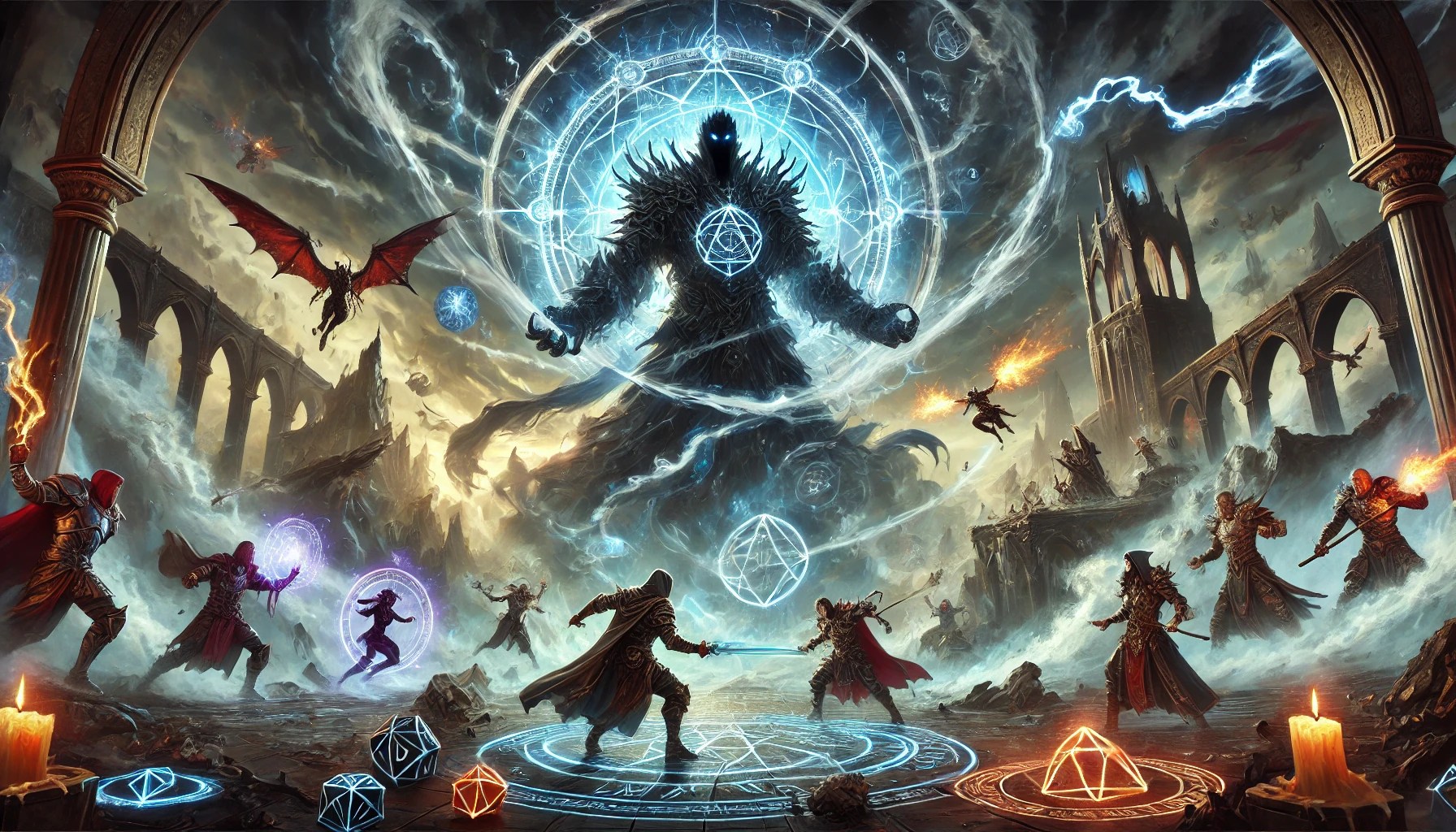
If you’ve ever run a boss fight in a tabletop RPG and felt it didn’t live up to the hype, believe me—you’re not alone. I’ve planned for weeks to make the final showdown epic, only to have my players steamroll the boss in a couple of rounds or lose interest halfway through because it felt like “just another combat.” It can be soul-crushing. Boss fights are supposed to be these grand, nail-biting moments, but they can fall flat without the right structure.
Thankfully, I stumbled across a video from The DM Lair (linked below). It breaks down exactly how to run multi-stage boss fights that are exciting, memorable, and worthy of the big bad you’ve built up over your campaign.
Let’s dive in, shall we?
The Problem with Boss Fights
Before we talk solutions, let’s get real about the challenges. My biggest issue has always been pacing. I’d either design a boss so weak that the party crushed it before it had a chance to shine, or I’d make it so powerful that the players spent three hours chipping away at its health bar with no payoff. Sound familiar?
Another common pitfall: static encounters. If the fight takes place in one boring room with no changes, it can start to feel more like a grind than a climactic battle. And don’t even get me started on the time my players nuked my carefully crafted boss before it even acted. (RIP, Sereg. Defeated via Boop on the nose.)
What Makes a Great Multi-Stage Boss Fight?
Here’s where things get exciting. The key to a great boss fight is treating it like a story within the story. Think of your favorite movie battles: the hero doesn’t just trade punches with the villain. The stakes escalate. The environment shifts. The villain adapts. That’s exactly what you want to emulate in your games.
Here are some tips from The DM Lair that were a good reminder for me—and that I’m hoping my aged brain will retain for my next boss battle:
- Add a Timer: Whether it’s a ritual about to be completed or a collapsing environment, giving players a sense of urgency changes everything. Suddenly, they’re not just trying to win; they’re trying to beat the clock.
- Shake Up the Battlefield: Make the terrain dynamic! Maybe a bridge collapses, lava starts flowing, or new hazards appear. Keeping the environment interesting ensures the fight feels alive.
- Include Minions: Don’t let your boss fight alone. Add waves of minions or lieutenants to keep the party busy and spread the action across all characters.
- Evolve the Boss: Let the villain reveal new powers or tactics as the fight progresses. Keep your players guessing and adapting.
- Roleplay the Boss: This was a big “aha” moment for me. Treat the boss like a character, not just a stat block. Show their confidence in the early stages, their anger as things go wrong, and their desperation when the tide turns. It makes the fight so much more personal.
Breaking It Down: The Stages
The video outlines four stages for a boss fight, and I’m hooked on this structure. Here’s the breakdown:
- Stage 1: Minions and Defense
The boss hangs back, letting their underlings soften up the party. Maybe they’re preparing a ritual or taunting the heroes from a safe distance. - Stage 2: Overconfidence
The boss steps in, testing the waters with flashy but manageable attacks. Think of this as them showing off—players love a villain with a flair for drama. - Stage 3: Adaptation and Anger
Now the gloves come off. The boss starts using their strongest abilities, adapting to the party’s tactics, and showing why they’re the campaign’s big bad. - Stage 4: Desperation
When the boss is on the ropes, they get desperate. Maybe they transform into a monstrous new form, unleash a devastating ultimate ability, or even try to bargain. This stage should push the party to their limits.
Lessons Learned
One of the best takeaways for me was to tie these stages to the boss’s health or key events during the fight. For example, the battlefield might change when the boss drops to 50% health (Bloodied, to use a 4e parlance), or they might reveal a hidden ability after losing their minions. This approach keeps the players engaged and builds tension organically.
Another tip that’s been a lifesaver: foreshadow the mechanics. If your boss has a devastating ultimate ability, drop hints earlier in the campaign. That way, players feel rewarded for paying attention rather than blindsided.
And finally, don’t forget to design each stage so that different character types can shine. Maybe the rogue gets a chance to disarm traps in Stage 1, the barbarian holds off minions in Stage 2, and the wizard counters the boss’s ultimate move in Stage 4. Everyone gets their moment in the spotlight.
Your Next Boss Fight Awaits
Multi-stage boss fights take a little more planning, but the payoff is absolutely worth it. The next time your players face the big bad, they’ll remember it as an epic battle, not just another combat encounter.
Check out The DM Lair’s video for more insights (link below), and let me know in the comments if you’ve tried these strategies or if you have your own tips. Let’s make those bosses unforgettable!
(I still might use the kitten tarrasques, though.)

Pathfinder Session Recap: Heart of the Labyrinth

In this First Edition Pathfinder session recap of our Age of Worms campaign, the party faces deadly challenges inside the Heart of the Labyrinth, battles their former ally Kaldir Stormrage, and narrowly escapes the grasp of the infernal devil Pyraxus. Plus, a tense meeting with Elric Toplo uncovers dark truths about the Ebon Triad and the looming Age of Worms. #TTRPG #Pathfinder
Cal Volsung stood at the edge of a nightmare, his hands trembling as the theyrium cocoon whispered promises of power. Its foul essence slithered through his veins, twisting muscle and sinew, turning him into something else. His skin darkened, the edges of his vision swam, and he saw his hands become long, spidery things—drow hands. The curse clung to him tighter than a drowning man’s grip, and no matter how hard he fought, it was there. Oh, he staggered back out of the cocoon’s reach, sure. But the sickness inside him lingered, a poison worming its way into his soul. The others stood in a circle, silent, knowing what they knew but not wanting to say it: Cal was marked. And no one knew if that mark could be erased.
The Heart of the Labyrinth, that wicked engine of doom, sat dead and cold at the chamber’s center. Its once-thundering pulses had gone silent, and for a heartbeat, it felt like the whole world held its breath. Then the air grew heavy, thick as bad dreams. Shadows stretched, slithering up the walls like oil slicks. And that’s when they heard it—a low, rolling chuckle that seemed to come from nowhere and everywhere at once.
It was Pyraxus.
His voice slithered through the air, mocking them, wrapping around their throats like a noose. “You think you’ve won? This maze—my maze—isn’t just gears and stone. It’s flesh and bone. And you? You’re inside me.” His laughter filled every crack, every shadow. The temperature dropped, and the walls seemed to inch closer, like the whole labyrinth was swallowing them whole.
Kaldir Stormrage, the half-dragon berserker, gritted his teeth as the voice wormed its way into his mind. Pyraxus whispered promises sweet as honey and dark as tar—power, brotherhood, purpose. Kaldir, already hanging by a thread, felt that thread snap. His eyes glazed over, and his scales took on a dull, infernal sheen. When he opened his mouth, it wasn’t a man’s roar—it was the guttural bellow of a devil.
The fight was brutal. The party threw everything they had at their former ally, but Kaldir fought like a wild storm, fists and flames battering them with the fury of a god gone mad. They shouted his name and begged him to fight the corruption, but it was like shouting into a storm—he couldn’t hear them. And in the end, they had no choice. Their blades found flesh, and Kaldir fell, his monstrous body hitting the ground with a dull, final thud.
That’s when Pyraxus’ voice came again, dripping with glee. “You think killing him freed him? No, no, his soul is mine now. You only saved him from one prison just to toss him into another.”
Before the party could catch their breath, the treasure hoard at the heart of the Labyrinth began to move. Gold coins lifted into the air like a swarm of angry wasps. Gems glittered with a dark, hateful light as they spun into a storm of metal and malice. The hoard came alive, and it wanted blood.
It was chaos—coins cutting through flesh like razors, gems smashing into armor with bone-shattering force. The party fought tooth and nail to survive the storm, but it was like trying to hold back the tide. They couldn’t win, not like this. Their only hope was the Clockwork Gate at the far end of the chamber, the portal flickering like a candle on the edge of going out.
With trembling hands and racing hearts, they worked together, each second feeling like an hour, assembling the gate piece by piece. And all the while, Pyraxus was in their heads, whispering doubts and fears, filling their minds with images of failure. One wrong move, one missed bolt, and they’d be trapped in the labyrinth forever.
Just as the storm of treasure closed in for the kill, the gate roared to life with a mechanical clatter. They leapt through, one by one, hearts in their throats, as Pyraxus unleashed one final illusion—a blaze of hellfire and chaos, the walls crumbling, the air turning to poison. But the heroes knew it wasn’t real. They had to know. They clenched their eyes shut, gritted their teeth, and stepped through the gate—one last leap of faith.
Tike Myson was the last to step through. As the portal swallowed him, he glanced back over his shoulder one final time. Pyraxus stood at the center of the storm, a devil made of shadows and fire, bound to a prison of his own making. And then, the gate slammed shut, leaving the Labyrinth—and its infernal master—behind.
A Meeting with Elric Toplo
The heroes barely had time to catch their breath before the summons came. Elric Toplo wanted to see them, an old friend of Alfie Bud and a scholar of dark things best left buried. When they arrived at his estate, they were met by Pollard, a wiry old butler whose eyes held too many secrets. He led them through the grand foyer, past ancient suits of armor and faded banners from battles long forgotten. There, among the relics of another time, hung a painting—two boys kicking a soccer ball across a sunlit field. Alfie and Elric, once friends, before the world grew dark around them.
Elric met them in the parlor, a room that smelled of old books and pipe smoke. He was a thin man, his frail frame wrapped in a scholar’s robes, but there was steel in his eyes. When he spoke, it was with the quiet authority of someone who knew too much. And what he knew now was the stuff of nightmares.
Green worms. The kind that don’t just kill you—they take you. They burrow into your flesh, into your mind, turning you into something else. Something worse. And these weren’t just mindless undead; no, these creatures were part of something bigger. They were pieces of Kyuss Descimus, a necromancer who dreamed of godhood and damn near got there. Elric told them how the worms spread like a disease, each one a piece of Kyuss’ mind, each one whispering his will. And the Ebon Triad—they were working to free him. The prophecies were already in motion, gears turning in the shadows, and if the heroes didn’t stop it, the Age of Worms would come.
GM Notes
Running this session was a little like trying to balance on a knife’s edge. It had moments where everything clicked into place like clockwork gears, and others where I could feel things slipping, no matter how tightly I tried to grip the narrative. Here’s where the session shined, and where it didn’t.
What I Liked About The Session
- The Kaldir encounter – a shot at salvation that slipped through their fingers.
I wanted to give the players a real chance to avoid having to fight Kaldir, their ally-turned-berserker. The encounter wasn’t just a hack-and-slash; it was a puzzle wrapped in tragedy. They had different ways to pull him back from the edge—through persuasion, tactics, or skill checks designed to disrupt the mental grip of Pyraxus. Unfortunately, the dice turned cold on them at the worst moment. Still, that’s the kind of heartbreak I love in a game: the players had the tools, the opportunities, but fate had other plans. A gut-wrenching failure makes for a better story than an easy victory any day. - The Escape Protocol – skill checks done right.
Here’s the thing: I’ve got one player whose PC is built to absolutely destroy skill checks—high bonuses stacked across Knowledge and various proficiencies. And yeah, that tends to leave the others twiddling their thumbs when those moments arise. But the Clockwork Gate sequence forced everyone into the spotlight. Sure, Mr. Skill Master got his moment to shine, but this wasn’t just his show. Every player had a role to play; the clock was ticking, the pressure was on, and success was a team effort. That tension, where everyone contributes meaningfully? That’s the gold standard I aim for.
What I Didn’t Like
- The Elric Toplo info dump – when sticking to the script goes sideways.
Here’s where I dropped the ball. I leaned too hard on the published material, which ended up biting me. The whole idea was for Elric Toplo to provide critical intel on the green worms and the Ebon Triad, but my Skill PC had already aced some big rolls earlier, uncovering most of that lore. By the time they met Elric, it felt like a rerun—info they already knew but wrapped in a fancier package. I should have improvised—pivoted off-script and given Elric something new to add, a breadcrumb that wouldn’t spoil future events but still rewarded the players for their patience in getting to that point. Lesson learned: just because it’s written doesn’t mean it can’t be rewritten on the fly. Keep it fresh, keep it dynamic, or risk having those high-stakes moments fall flat.





 Rokk Talk