Blog Archives
Second Darkness | Episode 43 – Welcome to Armageddon
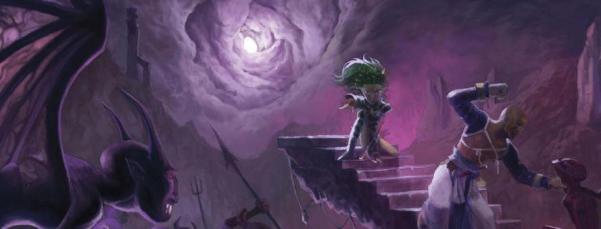
My group recently ran what was to have been the culmination of Book Three for Pathfinder’s Adventure Path “Second Darkness.” I say it would have been because we didn’t get to finish the final boss fight. However, I left it on enough of a cliffhanger that the party is already trying to schedule the next session to see how things progress.
I normally don’t do session summaries for my Pathfinder campaign, so I’ll provide a link to a summary of said Episode 43, as well as to the entire Second Darkness campaign so far. But I’d like to get into the habit of doing this to help sort ideas out in my head. I’d also like to get feedback or suggestions from others, and maybe help other GM’s who might share the same headaches I have.
My players don’t know about this page so I may post some spoiler material here. If you are one of the players in my campaign, TURN BACK NOW!!
Session Highlight
It’s always satisfying when a longtime plot point finally resolves. An ally to the party had been abducted by the evil drow wizard, the BBEG of this arc of the story. The wizard was fascinated with transmutation magic and had been investigating old magics and demonic powers in hopes to create the perfect living weapon. When the party confronted the BBEG and he saw the ally among them, he was thrilled to see what he called his “greatest triumph.” The ally was confused until the wizard spoke a command word that violently changed him into a giant rage monster who lashed out at the nearest target. Said target happened to be the party cleric. He grabbed hold of the hero and…
… dude got straight-up Loki’d.
Session Lesson
This AP has already been changed from what was written on the page. It started when the players latched onto a new villain, one they came to despise so much that I called an audible and made him the campaign’s BBEG. After that, things started changing all over. So far I don’t think my players have been able to tell that things had changed. Or cared for that matter.
Breaking from the “as written” railroad aspect has given me some flexibility with how things are done. My players believed that the only way to advance the story was to go from quest hub to quest hub like some online RPG. There have been occasions where they were presented with what seemed like reasonable progression routes. They’d also come up with their own ideas to pursue. All of which were not part of the core campaign path.
In each case, though, I made sure to remind them (through allies or NPC’s) that things were in progress and there were options closer to the main objective that they could look into. But they felt these sidequests were equally important. I didn’t dissuade them. I built encounters, gave them information, and once they were satisfied they came back to deal with the main objective.
There is a mentality amongst tabletop RPGers that campaigns are much like video games. Something may be threatening, disaster may be looming, but it will simply continue to loom until you pass a certain checkpoint to trigger the script.
I feel like maybe my players were in the same mindset. A few sessions ago they watched one of their allies being abducted and dragged through a portal into a shadow dimension. Rather than charge through the portal to rescue him, the party opted to go back to town. They wanted to find someone who had been in there before and get some information about what might be lurking in there. They took a few days of exploration and questing, got their information, and felt ready to make their move.
But when they got back to town, they were told that their ally had somehow been turned. He appeared to be in charge of an undead army now, and if the party didn’t surrender the army would wipe out the town. They repelled the army, or what there was of it, and discovered an invitation from their former ally to join him in the shadow realm.
During our last session, they entered the portal, navigated the shadow dimension, and met their former ally. He had been turned into a vampire, and wanted nothing more than to make the party suffer as he had suffered. “You left me to die,” he told them. “I saw you as they dragged me away, and you did nothing to save me.”
The party broke character for the most part. People who normally have their characters speak with an accent defended their actions using their normal voice. Others simply behaved very unlike their characters when they tried to justify what they did. At that moment it became clear what they had done, and what it had cost. It felt like they realized that their inaction had repercussions. Time had continued to move on for the rest of the world while they went off to do other things. Things were dynamic and not holding in place until they were triggered.
What I learned: Keep the world dynamic. If the BBEG has a plan, keep it rolling. If the players decide to take their time, maybe rest a few days to get good and ready, there can (and should) be consequences for their hesitation. Consequences are what makes every decision they make, that much more important. Their hesitation may cost someone (or many someones) their lives.
Have your players ever made a decision that ended up being much more consequential than they expected? I’d love to read it, so leave it in the comments below!
Encounter Balance
As I’ve mentioned before, I’m the GM for our Pathfinder campaign, the “Second Darkness” Adventure Path. During a recent session (the summary of which can be found HERE), the party fought its way through the Academy of Arts, following clues that seemed to hint that two of the allies that had joined them in the assault had been taken prisoner by the drow who have been laying siege to the city of Celwynvian for as long as anyone can remember.
All roads (and blood trails) led the PCs here. “Here” being the room with a portal leading to a place called the Armageddon Echo, a pocket dimension of sorts created from the Shadowrealm. The drow had retreated to the Echo a number of times in the past but had closed the portal behind them before their pursuers could follow.
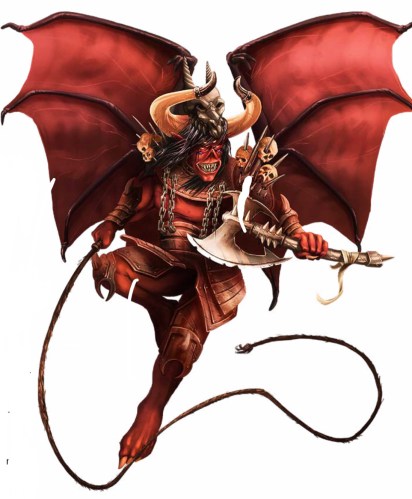
This time, the portal was still open. It was also being guarded by a very large, very dangerous demon that the drow had summoned to prevent anyone from following through the portal before it could close.
The plan, of course, was for the PCs to defeat the demon and follow the drow. In fact, there was an entire section in the Adventure Path book devoted to the Armageddon Echo. But, as is often the case regardless of the RPG you’re playing, no plan survives first contact with the players.
Through a mix of tough opposition and the RNG gods doing what they do when dice are rolled, one player character was killed and another ended up petrified before the demon was finally killed. One of the PCs intelligent familiars had also been petrified. There were still four PCs remaining, as well as one NPC who had arrived on the scene to aid them. Instead of charging through the portal, they decided to let it close and retreat with their fallen party members.
For some reason, I had not considered that option. I decided to dangle a carrot in front of them and had them all roll a perception check. The player with the highest roll caught a glimpse through the flickering portal of one of their allies being dragged away in chains. Would they choose not to go through the portal, knowing that their elven allies were definitely being held captive by their hated foe? The PC chose not to tell the rest of the party what he had seen, and they let the portal close.
It was unexpected but given the circumstances not all that surprising. Once the session was over, I realized that it was also my fault.
In the Adventure Path, the portal guardian had originally been a drow “pain taster” barbarian. I didn’t feel like that was enough for a couple of reasons. One, the PCs hadn’t really faced very many demons despite numerous indications that the city of Celwynvian was crawling with them. Two, if they really wanted to slow down or stop the PCs, the drow would have left someone a little more dangerous than a single drow (granted, the creature’s Challenge Rating or CR was equal to the party level but still).
Story-wise, the demon made sense. Campaign-wise, it didn’t. At least, not with the demon I chose. I had wanted to challenge the party when I should have simply slowed them down. Had I left the barbarian in place, the encounter would have lasted maybe two rounds. The PCs would have taken minimal damage, and after spending some quality time with their wand of Cure Light Wounds they would have been back up to full strength. There would have been zero hesitation in charging through the portal.
However, the challenge should have been saved for encounters within the Echo. Because I jumped the gun with the danger, there was a very good chance that the PCs might not be in a position to continue the way the Adventure was planned. That was the case here, and the party retreated rather than advanced.
There would be other options for the plot to continue as intended, but that would be a decision I would leave up to the players.
Big Mistake.
Lesson Learned
As Game Masters, we like to challenge our players. But not every situation needs to be a life for death situation. When designing an encounter, always consider the best and worst-case scenario. Well, almost the worst case. The worst case would be a TPK and the villains breaking into a happy dance over the PCs corpses. An option to be considered during a boss fight, but not so much during the road to the boss fight.
The best-case scenario for an encounter would be for the PCs to one-shot their opposition and continue on their path to glory without even breaking stride. That one, or degrees of it, should be expected most of the time.
The “almost worst-case”? Consider if the PCs roll poorly in the encounter. Are there mechanics involved that could take a player character out of commission (like petrification)? What if the creature involved scores critical hits on a single target and kills them? If there’s a possibility that some of the PCs might not survive the encounter, consider how the party might react to that. Can they immediately recover, burning resources but keeping them moving forward? Or will they be forced to retreat and regroup? If so, are there repercussions to hesitating?
Hope for the best, but don’t forget to plan for the worst. Or almost worst.




 Rokk Talk