Category Archives: RPG Actual Play
Table-top RPG
Unleashing the New 2024 D&D Dragons in My Pathfinder Game
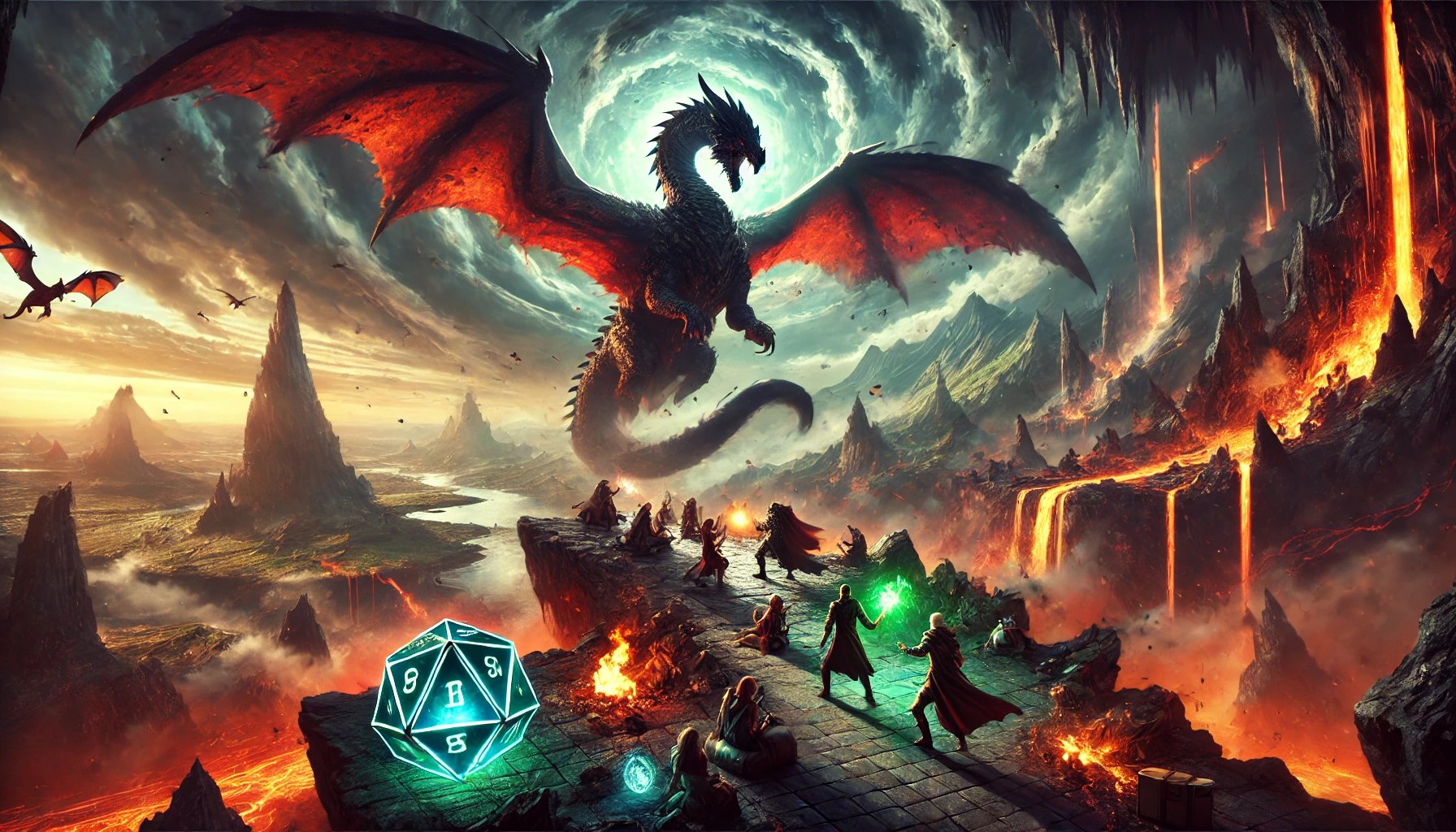
When I heard about the dragon updates in the 2024 Dungeons & Dragons Monster Manual (on sale February 18th, 2025), I couldn’t resist digging into the details. Dragons are the apex of fantasy monsters, full stop. These changes aim to make them feel as legendary in gameplay as they are in lore.
While I’m a die-hard Pathfinder First Edition GM, these updates are too good to ignore. I’m already planning to integrate some of these changes into my game, and I’ll walk you through why they’re a game-changer (pun intended).
Dragons, Elevated: What’s New?
If you’ve ever run a dragon encounter and felt it didn’t live up to the hype, you’re not alone. The new Monster Manual seems to have taken that criticism to heart, overhauling dragons to be more dynamic, dangerous, and memorable. Here’s what caught my eye:
1. Dragons with Complex Mechanics
Dragons are no longer just big lizards with hit points and a breath weapon. They’ve gained mechanical depth, especially at higher challenge ratings.
- Spellcasting Built In:
Adult and ancient dragons now include spells that reflect their cunning and magical nature.- Example: A black dragon can hurl acid with Vitriolic Sphere, while a green dragon can twist minds with Modify Memory or Geas.
- For Pathfinder, I’m considering changing my dragons to have more thematic spells. Why does an adult red dragon not cast Fireball or Wall of Fire?
- Legendary Actions with Personality:
Each dragon’s legendary actions now align with its temperament.- Red dragons dominate others with their commanding presence, while black dragons summon swarms or unleash sonic booms.
- I’ll be tweaking my homebrewed Pathfinder legendary abilities to reflect this, like giving a blue dragon a “storm surge” to call down lightning on enemies.
2. Distinctive Personalities and Lore
One of the more interesting updates is how dragons feel unique at every life stage. They’re no longer just “a bigger version of the same dragon” as they age.
- Chromatic Dragons:
Their destructive tendencies are tied to their themes.- Black dragons thrive on decay, often surrounded by undead minions.
- Red dragons are tyrannical rulers who hoard treasures and command armies.
- For my Pathfinder games, I’m leaning into the undead angle for black dragons. Imagine a necromantic black dragon raising skeletal knights to guard its lair.
- Metallic Dragons:
Now considered heroic but flawed, metallic dragons are no longer perfect do-gooders.- Gold dragons might see themselves as stewards of ancient duties, clashing with adventurers who disrupt their plans (which they tend to do on the regular.)
- Silver dragons, chivalrous and overconfident, could drag your players into their overzealous schemes.
- I love the idea of a silver dragon recruiting the party for a “heroic” crusade, only to discover the mission is more reckless and morally gray than it originally appeared.
3. Artistic Inspiration
The new art direction for dragons is impressive. Each image tells a story, from green dragons lurking in shadowy swamps to ancient red dragons surveying volcanic peaks. It’s a reminder that dragons are more than combat encounters—they’re world-shaping entities, as they should be.
For my Pathfinder games, these visuals are pure motivational gold. I’m already planning to rework lairs to reflect the personality and environment of each dragon. A blue dragon’s cavern, for instance, might crackle with static electricity, while a green dragon’s swamp could ooze with toxic, bubbling pools.
4. Tactically Rich Encounters
Perhaps the best update is how these changes make dragon encounters more dynamic. Dragons now intelligently use their entire suite of abilities, leveraging their environment and legendary actions.
- Lair Mechanics:
Dragons gain extra legendary actions and resistances in their lairs, turning the environment into a weapon.- For Pathfinder, I’m considering giving lairs regional effects—like volcanic eruptions for red dragons or acid rain for black dragons.
- Long-Range Threats:
Dragons aren’t just melee bruisers anymore. They’re deadly at all ranges, with spells, mobility, and legendary actions to dominate the battlefield, which they sorely needed.
Why These Changes Matter
Dragons should feel like epic encounters, not just a tougher troll with wings. These updates elevate dragons to their rightful place as the pinnacle of fantasy monsters, both in combat and story.
Even if you’re running Pathfinder like me, these ideas are easy to adapt. By incorporating thematic spells, tailored legendary actions, and distinct lair mechanics, you can make your dragons unforgettable.
Final Thoughts
Whether you’re a D&D or Pathfinder GM, the 2024 Monster Manual updates are worth exploring. They add mechanical complexity, rich lore, and breathtaking visuals that breathe new life into these iconic creatures.
I’ll definitely be tweaking my Pathfinder dragons with these ideas—what about you? How do you make your dragon encounters legendary? Share your tips in the comments, and don’t forget to check out the video for more inspiration!
Transform Your RPG Campaigns with South Park’s ‘Therefore/But’ Storytelling Method

If you’ve ever felt torn between running an immersive, player-driven campaign and sticking to the carefully crafted beats of a pre-written adventure path, you’re not alone. I’ve been experimenting with ways to strike that balance, and recently, I stumbled across a method from an unexpected source: South Park.
Yes, you read that right. Trey Parker and Matt Stone’s storytelling technique, the “Therefore/But” method, is great for tabletop RPGs like Pathfinder and Dungeons & Dragons. Inspired by a video (linked below), I’ve started using this approach to give my players more agency in what might otherwise feel like a “railroad” campaign. Here’s how it works and why you should try it too.
What Is the “Therefore/But” Method?
At its core, this method is about replacing boring, disconnected storytelling with something dynamic and meaningful.
- The Problem: Stories that rely on “and then” lack cohesion and depth. (“The players fought some goblins, and then they found treasure, and then they moved to the next town.”)
- The Fix: Swap “and then” for “therefore” (cause and effect) or “but” (conflict/obstacle). This simple shift creates interconnected narratives where events flow naturally and feel significant.
Why It Works for RPGs
As a GM, you’re not just telling a story—you’re reacting to a living, breathing world shaped by your players. The “Therefore/But” method is perfect for this because it builds on player choices, making their actions feel impactful and driving the story in unexpected directions.
There are definite perks to using this technique:
- Player Investment: Players are more engaged because their choices have visible consequences.
- Simplified Prep: GMs can focus on the big picture and improvise based on the players’ decisions, rather than over-preparing every detail.
- Surprises for Me: As a GM, this method makes the story unpredictable in the best way.
How to Apply the Method
Here’s how to use it as part of your GM prep:
- Start with Broad Story Beats: Outline major milestones—like the villain’s ultimate plan or key artifacts the party must recover.
- Let the Players Drive the Details: Instead of railroading them toward specific outcomes, let their actions and decisions shape the journey.
- Use “Therefore” and “But” to Evolve the Story: For every choice they make, ask yourself:
- What changes in the world as a result? (Therefore…)
- What new challenges arise from this? (But…)
Tips for Using “Therefore/But”
- Lean on NPCs: NPCs are a great way to show cause and effect. Did the party spare an enemy? Therefore, that NPC might warn them about an ambush. Did they steal from a merchant? But now they’ve got a bounty on their heads.
- Foreshadow the Domino Effect: Drop hints about how the world is changing. For example, if a town is burned during a battle, the refugees might crop up later, needing help—or seeking revenge.
- Be Flexible: Sometimes, your carefully planned “therefore” or “but” will get derailed by players’ actions. Roll with it! The method thrives on improvisation.
Transforming Railroad Adventures
One of the coolest things about this method is how well it fits into pre-written campaigns. Adventure paths often feel linear, but by weaving in “therefore” and “but,” you can create the illusion of a player-driven story.
For example:
- The villain flees after a failed battle, but leaves behind cryptic plans that spark new quests.
- The party defeats a bandit leader, therefore a rival gang moves in to take control.
Even in a structured campaign, these cause-and-effect moments make the story feel alive.
Why You Should Try It
Incorporating the “Therefore/But” method can make your sessions more vibrant and collaborative. Players constantly ask, “What happens next?”—and even the GM won’t always know! That unpredictability keeps the game fresh for everyone.
If you’re tired of predictable storytelling or feeling trapped by your own prep work, give this method a shot. It might just transform how you run your games.
Check out the video (linked below) for more inspiration, and let me know in the comments: How do you balance structure and player agency in your campaigns? Let’s swap ideas and make our stories unforgettable.
5 Overlooked GM Secrets That Will Wow Your Players

Whether you’re running Pathfinder, Dungeons and Dragons, or any other tabletop RPG, it’s easy as a Game Master to get lost in the sprawling to-do list that comes with running said tabletop RPG. You’re juggling story arcs, encounter designs, and the ever-elusive question: What’s going to make my players rave about this session?
I’ve been there. I’ve prepped hours of lore that no one cared about, thrown random encounters that got people looking at their phones rather than their character sheets, and even lost control of sessions because we spiraled into off-topic chaos. But I’ve also had moments where everything clicked—when players were so immersed, minutes ticked by like seconds.
Recently, I came across a video (linked below) that breaks down seven overlooked elements GMs often miss but players love. Let me share a few of those highlights, plus examples of how I’ve stumbled, learned, and nailed these ideas at my table.
1. Moral Dilemmas
Players “love” being faced with tough choices. It’s not about good versus evil but about weighing trade-offs and consequences. I use quotation marks because some players prefer to play in Murderhobo mode, consequences be damned.
💡 Pro Tip: Make sure both options have pros and cons—no easy wins here!
2. Be Generous with Information
Have you ever watched your players flounder, unsure what to do, while you sit there thinking, The answer is right there, guys!? Turns out, sometimes we need to throw them a bone.
It’s easy to forget that players have a “flashlight view” of their surroundings. They see what’s directly in front of them and a little bit of what’s behind them as it fades into the darkness. Refreshers, reminders, and some strong hints and clues can help keep things fresh in their minds.
💡 Pro Tip: Especially in non-mystery games, offer enough clues to keep the story moving. Players don’t have access to your notes, after all!
3. Manage the Game
This one hit home for me. Early in my GM days, I’d let tangents derail entire sessions. While jokes and side stories are fun, too much chaos can kill the momentum.
Now, I start on time (or as close as possible), gently redirect when we veer off-course, and use initiatives or turns to keep combat smooth. It’s made sessions feel tighter and more satisfying.
💡 Pro Tip: Be flexible but firm. A light reminder like, “Let’s bring it back to the game,” keeps things moving without being a buzzkill.
4. Make Travel Interesting or Skip It
Travel sessions used to bore me and my players—until I started treating the journey like part of the story.
In one campaign travel session, I replaced random encounters with a mysterious landmark: a crude dam in the middle of a river that shouldn’t have been there. The players investigated, theorized, and role-played their reactions. That one detail made the trek memorable without adding extra prep. Sadly, that campaign ended before the foreshadowing could have paid off, but such is the nature of the game.
💡 Pro Tip: If travel doesn’t advance the story or characters, skip it. When it does, tie it to the world or plot in meaningful ways.
5. Run Challenging Combats
We all want our players to feel heroic, but if every fight is a cakewalk, it loses its thrill. This point could be a full-blown post all on its own. There’s so many factors that can make this a tight balancing act, but when it gets pulled off it hits different.
💡 Pro Tip: Don’t be afraid to push your players. High-stakes battles are what legends are made of.
Bonus Tips
- Use Modules: Pre-made adventures save time and often include puzzles, traps, and creative NPCs.
- Surprise Them: A unique monster or unexpected twist keeps players on their toes.
The Takeaway
Players don’t always notice the hours you spend behind the screen, but they do notice when a session feels alive, engaging, and fun. By focusing on these areas—as well as the ones discussed in the video below—you’ll create experiences your group will never forget.
Check out the video from The DM Lair (linked below) for even more insights, and let me know in the comments: Which of these tips are you most excited to try? Or share your own GM successes (or fails)!
Let’s make every session legendary.
Crafting Epic Multi-Stage Boss Fights for TTRPGs

If you’ve ever run a boss fight in a tabletop RPG and felt it didn’t live up to the hype, believe me—you’re not alone. I’ve planned for weeks to make the final showdown epic, only to have my players steamroll the boss in a couple of rounds or lose interest halfway through because it felt like “just another combat.” It can be soul-crushing. Boss fights are supposed to be these grand, nail-biting moments, but they can fall flat without the right structure.
Thankfully, I stumbled across a video from The DM Lair (linked below). It breaks down exactly how to run multi-stage boss fights that are exciting, memorable, and worthy of the big bad you’ve built up over your campaign.
Let’s dive in, shall we?
The Problem with Boss Fights
Before we talk solutions, let’s get real about the challenges. My biggest issue has always been pacing. I’d either design a boss so weak that the party crushed it before it had a chance to shine, or I’d make it so powerful that the players spent three hours chipping away at its health bar with no payoff. Sound familiar?
Another common pitfall: static encounters. If the fight takes place in one boring room with no changes, it can start to feel more like a grind than a climactic battle. And don’t even get me started on the time my players nuked my carefully crafted boss before it even acted. (RIP, Sereg. Defeated via Boop on the nose.)
What Makes a Great Multi-Stage Boss Fight?
Here’s where things get exciting. The key to a great boss fight is treating it like a story within the story. Think of your favorite movie battles: the hero doesn’t just trade punches with the villain. The stakes escalate. The environment shifts. The villain adapts. That’s exactly what you want to emulate in your games.
Here are some tips from The DM Lair that were a good reminder for me—and that I’m hoping my aged brain will retain for my next boss battle:
- Add a Timer: Whether it’s a ritual about to be completed or a collapsing environment, giving players a sense of urgency changes everything. Suddenly, they’re not just trying to win; they’re trying to beat the clock.
- Shake Up the Battlefield: Make the terrain dynamic! Maybe a bridge collapses, lava starts flowing, or new hazards appear. Keeping the environment interesting ensures the fight feels alive.
- Include Minions: Don’t let your boss fight alone. Add waves of minions or lieutenants to keep the party busy and spread the action across all characters.
- Evolve the Boss: Let the villain reveal new powers or tactics as the fight progresses. Keep your players guessing and adapting.
- Roleplay the Boss: This was a big “aha” moment for me. Treat the boss like a character, not just a stat block. Show their confidence in the early stages, their anger as things go wrong, and their desperation when the tide turns. It makes the fight so much more personal.
Breaking It Down: The Stages
The video outlines four stages for a boss fight, and I’m hooked on this structure. Here’s the breakdown:
- Stage 1: Minions and Defense
The boss hangs back, letting their underlings soften up the party. Maybe they’re preparing a ritual or taunting the heroes from a safe distance. - Stage 2: Overconfidence
The boss steps in, testing the waters with flashy but manageable attacks. Think of this as them showing off—players love a villain with a flair for drama. - Stage 3: Adaptation and Anger
Now the gloves come off. The boss starts using their strongest abilities, adapting to the party’s tactics, and showing why they’re the campaign’s big bad. - Stage 4: Desperation
When the boss is on the ropes, they get desperate. Maybe they transform into a monstrous new form, unleash a devastating ultimate ability, or even try to bargain. This stage should push the party to their limits.
Lessons Learned
One of the best takeaways for me was to tie these stages to the boss’s health or key events during the fight. For example, the battlefield might change when the boss drops to 50% health (Bloodied, to use a 4e parlance), or they might reveal a hidden ability after losing their minions. This approach keeps the players engaged and builds tension organically.
Another tip that’s been a lifesaver: foreshadow the mechanics. If your boss has a devastating ultimate ability, drop hints earlier in the campaign. That way, players feel rewarded for paying attention rather than blindsided.
And finally, don’t forget to design each stage so that different character types can shine. Maybe the rogue gets a chance to disarm traps in Stage 1, the barbarian holds off minions in Stage 2, and the wizard counters the boss’s ultimate move in Stage 4. Everyone gets their moment in the spotlight.
Your Next Boss Fight Awaits
Multi-stage boss fights take a little more planning, but the payoff is absolutely worth it. The next time your players face the big bad, they’ll remember it as an epic battle, not just another combat encounter.
Check out The DM Lair’s video for more insights (link below), and let me know in the comments if you’ve tried these strategies or if you have your own tips. Let’s make those bosses unforgettable!
(I still might use the kitten tarrasques, though.)
Critical Role Opening Title
I was wondering when Critical Role was going to get themselves an “official” theme. They’re a multi-million dollar business now, so they should be taking the reins on all their intellectual property, including the opening title for their show.
Just like every other release, I’ll be playing the Hell out of this one too.