What Critical Role Gets Right About Lore
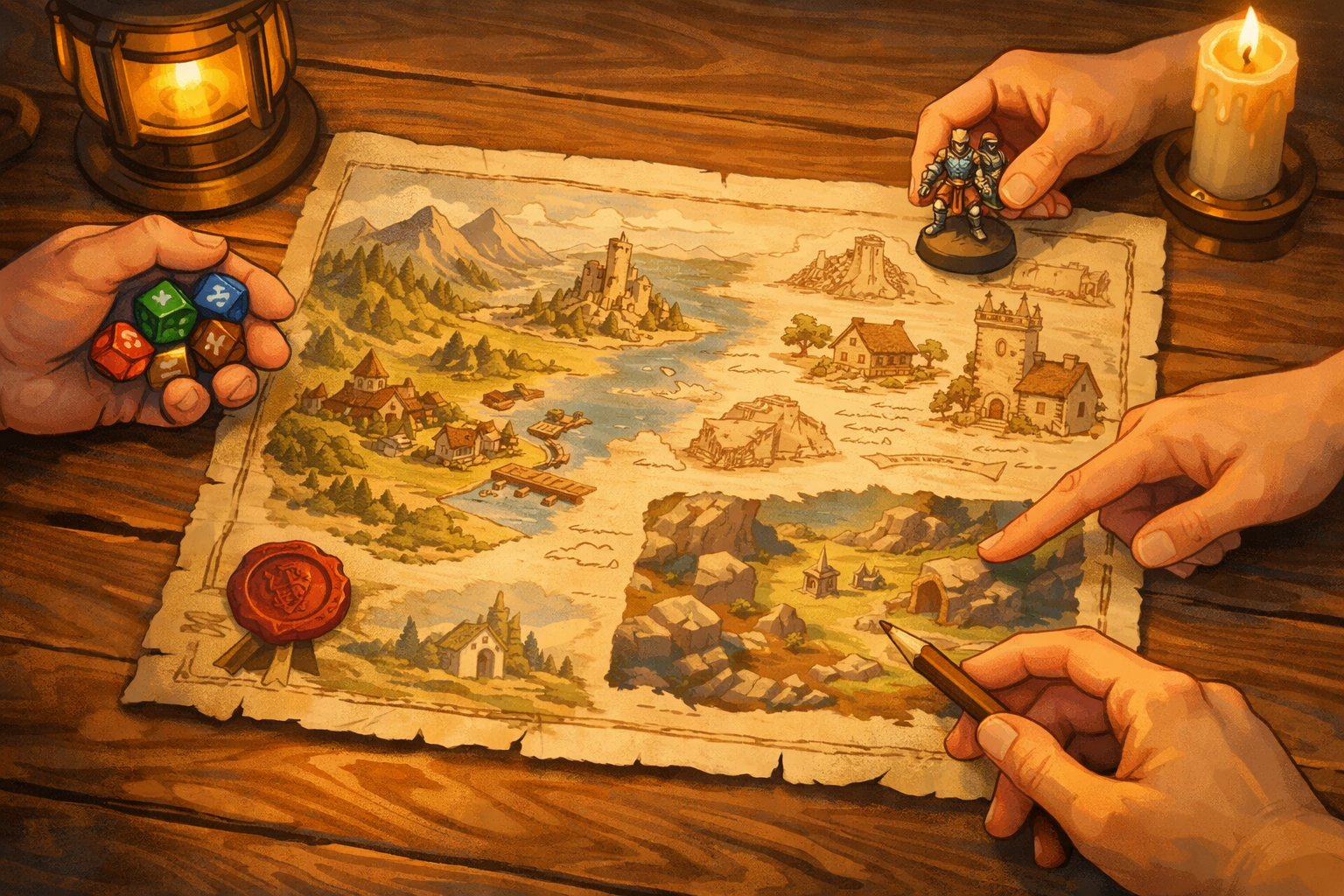
You spent six months building a world. You know the name of every noble house, the theological schism that split the twin gods apart three centuries ago, and exactly why the trade roads run east instead of west. You wrote it all down in a beautiful, lovingly formatted document. Maybe you even added art. Maybe you used a fancy font for the ancient empire’s name.
And then your players showed up, ignored every word of it, and spent the first session arguing about whether their characters should steal a horse.
Cool. Great. Wonderful. Love that for you.
Here’s the thing, though (and I say this with complete respect), the problem isn’t your players. The problem isn’t even your handout. The problem is that you built a broadcast tower in a medium that doesn’t receive broadcasts. And until you fix that, it doesn’t matter how good your lore is. It will keep getting ignored.
Let’s talk about why, and what to actually do instead.
The Real Reason Lore Gets Ignored (It’s Not Laziness)
Here’s a very easy thing to believe: your players ignored your handout because they’re lazy, or they don’t care, or they’re not the right kind of players for your game. And maybe one of them is a little bit of all of those things. But that’s not why lore gets ignored at the table.
Lore gets ignored because you’re using the wrong delivery system.
Think about it this way. You love D&D. You love RPGs. You probably also love Critical Role, or Dimension 20, or whatever actual play show has colonized your brain rent-free. Millions of people watch those shows and happily absorb enormous amounts of lore. They know the history of Exandria. They know the politics of the Ten Rings. They remember every detail of a character who appeared in one episode two years ago.
So players can care about lore. They just care about it when it reaches them through character drama, failure, consequence, and genuine stakes. Not through a Google Doc.
When Laudna’s past gets ripped open mid-session because of something she chose to do, the audience learns the lore of Whitestone by feeling it. Nobody handed them a reading assignment. The lore arrived through a story beat that mattered to someone they cared about. That’s the difference.
Your handout, no matter how good it is, is a reading assignment. And most of your players signed up to play a game, not do homework.
The Transmission Model Is Broken
Most worldbuilding advice treats lore delivery as a content problem. The handout is too long. The font is bad. The layout isn’t pretty enough. You need bullet points, or headers, or maybe a map. And some of that is real. GMs who cut their pre-campaign primers from 40–70 pages down to 4 pages with art found that every single player read it, and it changed how some of them approached their characters. So yes, shorter is better. Length absolutely matters.
But even a perfect 4-page primer runs into a wall eventually, because the real issue is philosophical, not cosmetic.
GMs tend to work on what you could call a transmission model of lore. I write it, I send it, you receive it, now we share a world. This model works great for textbooks, instruction manuals, and Wikipedia articles. It does not work for a game where your players’ attention is split between their character sheet, the dice, their snacks, and whatever their friend across the table just said that made everyone laugh.
Players don’t absorb lore. They discover it. And discovery only happens through action.
When a player makes a bad deal with the merchant guild and watches the consequences ripple outward for three sessions, they’ve learned more about your world’s political economy than any document could teach them. When an NPC reacts with fear to a symbol the players didn’t even know was important, curiosity kicks in. And curious players ask questions. That’s lore delivery. That’s the thing working.
Four Shifts That Actually Fix This
These aren’t tips. They’re ways of thinking about your world differently. Try all of them. Keep the ones that stick.
1. Stop front-loading. Build just-in-time.
One of the smartest frameworks in GM prep is what some designers call Just-in-Time worldbuilding. A concept borrowed, hilariously, from manufacturing. The idea is simple: by anticipating where the players will go next and detailing just that, you give players the false impression that your entire world is incredibly detailed and interconnected, and the correct impression that they’re in control of their actions.
You do not need to know the full history of your world before session one. You need to know enough to run the first session well, and enough about what might come next to prep the second. Everything else is overhead that drains your energy and clutters your brain.
Mike Shea of Sly Flourish, whose Return of the Lazy Dungeon Master won a Gold ENNIE in 2019, calls this spiral campaign development — starting from the immediate scene and expanding outward only as the players move toward new territory. The world grows with the campaign, not before it.
This isn’t laziness. It’s actually more demanding than traditional worldbuilding, because it requires you to improvise and respond rather than just transmit. But it also means your lore is always about something that’s immediately relevant. And relevant lore? Players pay attention to that.
2. Make lore matter mechanically.
Here’s a question. If a player in your game knows the history of the Emberfall War, what happens? Can they use that knowledge to get a better deal with a faction? Does it unlock a conversation path with an NPC? Does it give them an advantage of some kind on a roll?
If the answer is “not really, it’s just cool background,” then you’ve accidentally told your players that lore is decorative. And decorative things get ignored. Players are rational. There’s no reason to learn it when there’s no benefit to learning it and the path is already set.
The fix is to connect lore to decisions. Not every piece of lore needs to be a mechanic (that would be exhausting) but the lore you most want players to care about should change what they can do. An NPC who responds differently to players who know her family’s history. A locked door whose mechanism makes sense once someone remembers the architect’s design philosophy. A faction that offers better terms to characters who’ve proven they understand the cause.
When knowing things about your world has consequences, players start paying attention.
3. Build the world through character backstories, not before them.
Most GMs build a world and then invite players into it. The players are tourists. They can look around, but the history happened without them, the factions formed without them, and the ancient tragedy was written long before anyone at the table existed.
Here’s the shift: what if the players were part of the history before the campaign even starts?
This doesn’t mean handing over creative control. It means asking questions during session zero. Where is your character from, and what happened there that they’d rather forget? Who in this city owes your character a favor, and why? What’s the one piece of history your character knows that nobody else at this table does?
Suddenly, a player’s half-elf ranger is from the contested borderlands you were going to describe in a handout anyway. The lore didn’t change. But now one of your players has a personal stake in it. And here’s the perk about personal stakes — they spread. When one player visibly cares about something, the others at the table tend to start caring too. That’s just how groups work.
4. Use your world as subtext, not text.
The most common mistake new GMs make with lore is explaining things out loud that could be shown through detail instead. There, I said it. I’ve also done it (sigh).
Don’t tell players the city guard is corrupt. Let them bribe a guard in session two, have it work immediately, and watch the players’ faces change. Don’t explain the religion of the Sun Church through a handout. Put a crumbling Sun Church shrine in the dungeon with fresh offerings someone placed recently, and let players wonder who’s still leaving flowers for a dead god.
There’s nothing wrong with a brief bit of description as the GM, just don’t start rattling off facts about the city’s history and expect players to suddenly feel attached to the world’s lore. The detail does the work. You don’t have to narrate what it means.
Environmental storytelling, like graffiti, architecture, NPC behavior, the way a shopkeeper flinches at certain names, lands harder than any paragraph of history, because it makes players feel like detectives. And players who feel like detectives want to find more clues.
What Handouts Are Actually For
None of this means handouts are useless. They’re just not a delivery mechanism for lore. Here’s what they’re actually good for.
Handouts are a reference tool. A one-page map. A short list of faction names and their symbols. A house rule summary. Things players need to look up quickly during play, not things they need to internalize beforehand.
When you hand someone a document and expect them to come to the table having memorized it, you’ve created homework. When you hand someone a document they can glance at during the session to remember the name of the duke they’re about to meet, you’ve created a useful tool.
The same content, delivered at different moments with different expectations, lands completely differently.
The Lore That Gets Ignored Isn’t Wasted
When your players skip the handout, walk past the ancient mural, and miss the clue you spent an hour crafting, that lore didn’t disappear. It went into your GM brain, where it’s quietly making everything you improvise more coherent. The history you wrote shapes the NPCs you invent on the fly. The political tensions you mapped give you instant conflict whenever you need it. The gods you named give your world spiritual weight even when nobody’s praying to them.
Players don’t want to read the history of the campaign world. They want to play in the world. And a GM who has done the work, even the work that never surfaces directly, runs a better game. The world feels real because you know it, even when nobody asks.
So stop trying to download your world into your players’ heads before they’ve had a reason to care. Build the world through play. Let lore arrive through consequence, curiosity, and character. Keep your handouts short, your details sensory, and your history close enough to the surface that players can find it when they go looking.
Your players will engage with your world. They just need to stumble into it on their own terms.
Want to go deeper? Check out Mike Shea’s spiral campaign development framework at slyflourish.com, or dig into The Angry GM’s argument that the world only exists through play. Both will make you a more confident — and significantly less burned-out — GM.

Posted on April 6, 2026, in Blog. Bookmark the permalink. Leave a comment.





 Rokk Talk
Leave a comment
Comments 0