Scaling Adventures for Level 15+ Without Breaking the Game
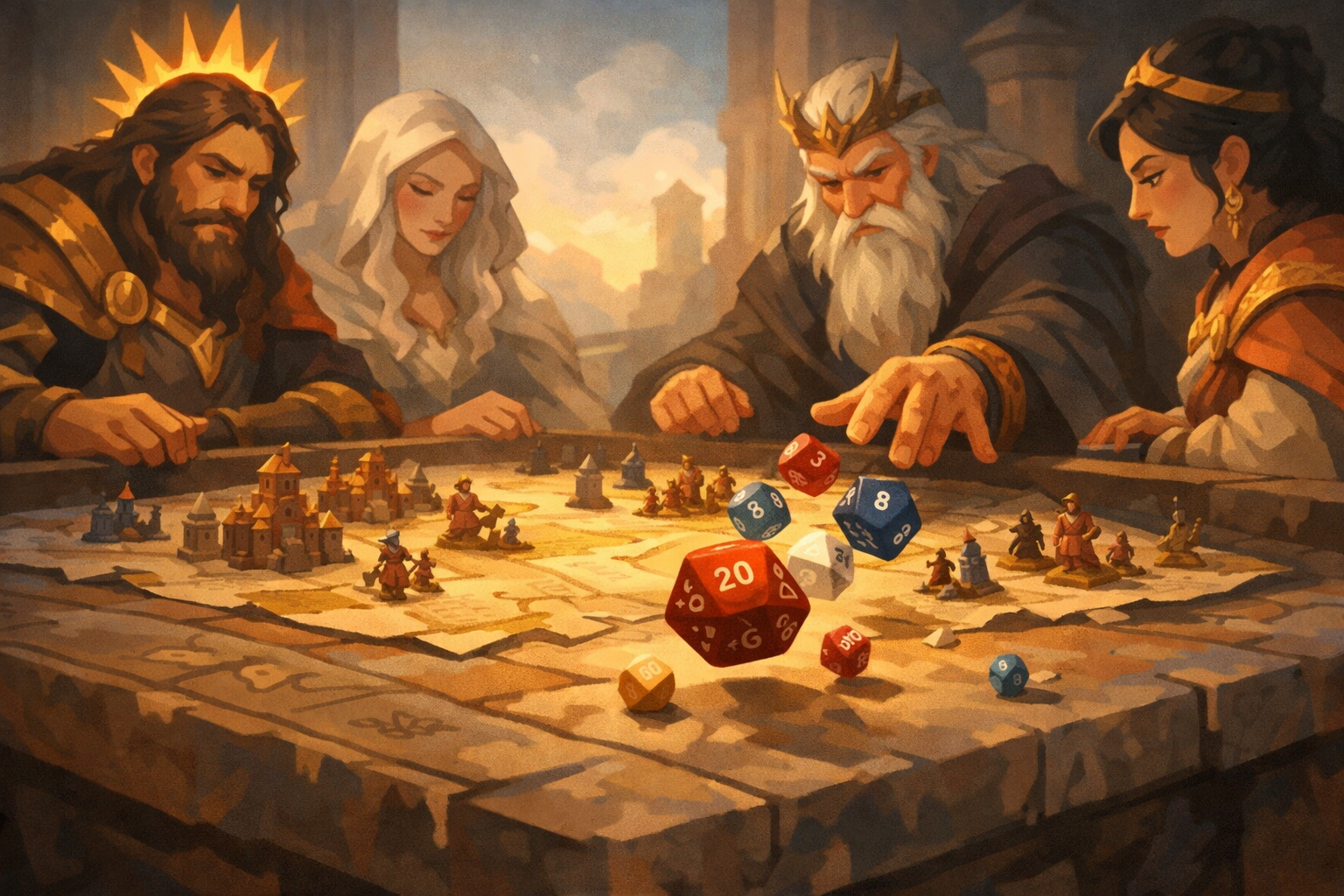
By the time characters hit level 15, something strange happens at the table.
Your players are powerful, clever, and confident. They can teleport across continents, rewrite probability, shrug off damage that once terrified them, and delete “boss monsters” in a round or two. And you, the Game Master, are stuck in a trap: if you design encounters the same way you did at level 7, the party steamrolls everything. If you crank the numbers, fights become rocket-tag, slogs, or unfair hard counters.
If this sounds familiar, here’s the hard truth:
High-level play doesn’t break because the math is wrong. It breaks because the adventure design hasn’t caught up.
This article is about fixing that. Not by banning spells. Not by inflating hit points until combat takes an hour. But by scaling adventures instead of just monsters, using a repeatable, table-tested approach that respects player power while restoring tension.
Why Level 15+ Feels So Hard to Balance
Let’s start by clearly naming the problem.
Most published advice and official guidelines are built around mid-level assumptions: limited mobility, incomplete information, and meaningful resource attrition across an “adventuring day.” At level 15+, those assumptions collapse.
Here are the three biggest reasons.
1. Action Economy Breaks Boss Fights
A single monster, no matter how tough, still only gets one turn. A party of four or five characters gets four or five turns, plus reactions, plus bonus actions, plus summoned allies.
This is why so many high-level bosses die in one or two rounds. It’s not that the monster is weak. It’s outnumbered in meaningful decisions.
This problem is so common that entire frameworks exist to address it. Sly Flourish’s action-oriented monsters and the widespread use of legendary actions are direct responses to this imbalance.
2. High-Level Abilities Skip Content
Teleportation, scrying, plane travel, divination, flight, resurrection. These don’t just make characters stronger; they let players opt out of large chunks of traditional adventure structure.
Travel scenes vanish. Mysteries collapse early. Carefully placed obstacles are bypassed with a single spell.
Many GMs respond by shutting these tools down entirely. That usually backfires. Players didn’t earn demigod powers just to be told they don’t work.
3. Encounter Math Stops Predicting Reality
Official encounter-building rules are useful baselines, but even community analysis shows they become unreliable at high levels.
Blog of Holding and similar analyses point out that encounter math can’t account for player optimization, synergistic builds, or the sheer efficiency of experienced parties. Two level 15 groups with identical XP budgets can perform wildly differently.
That’s why so many GMs report the same experience on forums: “Deadly” encounters feel trivial, until suddenly they’re lethal.
So if math isn’t enough, what does work?
The Mindset Shift: From Monster Balance to Adventure Systems
Here’s the key shift that unlocks high-level play:
At level 15+, balance is no longer about hit points and damage. It’s about pressure, choices, and consequences.
Instead of asking, “Is this monster strong enough?” start asking:
- What decisions are the players forced to make?
- What do they not have time to solve perfectly?
- What happens if they succeed too slowly, or in the wrong order?
To make this practical, we’ll use a simple framework I call the Four Scaling Dials.
The Four Scaling Dials
When scaling adventures for high-level characters, stop turning one dial (numbers) and start turning four.
Dial 1: Time
Time pressure is the single most underused tool in high-level play.
At low levels, characters run out of hit points. At high levels, they run out of time.
Examples:
- A ritual completes in 6 rounds unless interrupted.
- Every long rest advances a political coup.
- Each teleport triggers collateral consequences somewhere else.
- A collapsing fortress loses a section every round.
Time forces tradeoffs. The party can’t do everything, even if they’re powerful.
Actionable tip: Add visible countdowns. Put them on the table. Players make better decisions when they can see the clock ticking.
Dial 2: Space
High-level characters dominate single rooms. They struggle when the battlefield itself demands attention.
Examples:
- Multiple objectives in different locations.
- Vertical battlefields with falling, flight, and forced movement.
- Hazards that shift positions each round.
- Enemies attacking from separate fronts simultaneously.
Instead of one “boss room,” think in zones. Space creates meaningful positioning choices, even for flying, teleporting characters.
Actionable tip: Design encounters where winning means being in three places, not one.
Dial 3: Information
High-level magic excels at gathering information. Use that as a feature, not a problem.
The trick is partial truth.
Examples:
- Divinations reveal what, but not when.
- Scrying shows a decoy or outdated situation.
- Knowledge checks expose multiple threats, but not priorities.
- The party knows the villain’s plan, but not which lever stops it.
This preserves player agency while preventing perfect solutions.
Actionable tip: Replace “mystery solved” with “mystery reframed.”
Dial 4: Permissions
Permissions define what the world allows, not what spells can do.
Instead of saying “Teleport doesn’t work here,” say:
- Teleporting alerts ancient guardians.
- Planar travel requires negotiation with local powers.
- Resurrection is possible, but politically destabilizing.
- Divination draws attention from rival forces.
Abilities still work, but they create ripples.
Actionable tip: Every powerful ability should answer one question and raise another.
Designing Encounters as Ecosystems, Not Stat Blocks
One of the biggest mistakes in high-level play is treating bosses like bigger monsters instead of systems.
A good level 15+ encounter usually includes:
- A central threat (the boss or primary antagonist)
- Pressure sources (lieutenants, hazards, rituals, or objectives)
- Decision points (what to stop first, what to ignore)
- Escalation (the fight changes if it drags on)
Example: The Immortal General
Instead of:
A CR-appropriate general with more HP and damage.
Try:
- The general cannot be killed while three battlefield standards remain.
- Each standard buffs a different enemy unit.
- The standards are spread across the battlefield.
- Every round, reinforcements arrive from a different direction.
- Destroying a standard costs time and exposes the party.
Now the fight isn’t about damage output. It’s about coordination, movement, and priorities.
This approach aligns with why legendary actions exist in the first place: to prevent the “surround and pound” problem identified in countless GM discussions and guides.
Anti-Skip Design Without Banning Abilities
High-level magic skipping content is real. Banning it feels bad. Here’s the alternative: costed counters.
The ability works. It just isn’t free.
Teleportation
- Teleporting past defenses leaves allies behind.
- It advances the villain’s timetable.
- It exposes the party’s location to enemies.
- It bypasses danger but creates political fallout.
Divination
- Answers are accurate but incomplete.
- The future branches; acting locks one path.
- Powerful beings notice repeated probing.
Resurrection
- It works, but destabilizes alliances.
- The returned soul brings consequences.
- Enemies adapt tactics knowing death is temporary.
This preserves the fantasy of power while restoring tension.
The Calibration Loop: Finding Your Party’s Real Power
Here’s something rarely said out loud: party level is a suggestion.
Two level 15 parties can differ by the equivalent of five levels in effectiveness.
Instead of guessing, measure.
The Three-Test Calibration Loop
Over three sessions, include:
- An attrition encounter (multiple threats, limited rests)
- A control challenge (mobility, battlefield manipulation)
- A burst test (can they delete a major threat instantly?)
Track:
- Rounds to resolution
- Resources spent
- Downed characters
- Player stress levels
If they trivialize all three, treat them as higher-level for future design. If they struggle, ease back.
This method echoes common advice from experienced high-level GMs: adjust based on observed play, not tables.
Common High-Level Mistakes (and Better Fixes)
Mistake 1: Inflating Hit Points
This increases combat length without increasing interest.
Fix: Add objectives that end the fight early if handled well.
Mistake 2: Hard Counters
Blanket antimagic, immunity walls, or ability shutdowns feel punitive.
Fix: Use costs and consequences instead of negation.
Mistake 3: Solo Bosses
They rarely survive contact with optimized parties.
Fix: Build encounter ecosystems with multiple pressure sources.
Mistake 4: Unlimited Long Rests
Without pressure, resources don’t matter.
Fix: Use visible clocks, consequences, and chained scenes.
A Worked Example: Scaling a Mid-Level Adventure to Level 15+
Original premise:
Infiltrate a fortress, defeat the warlord, stop the invasion.
Level 15+ version:
- The fortress exists in three phased states.
- The warlord is only vulnerable during command shifts.
- Teleporting inside triggers defensive mobilization.
- Each hour advances the invasion on the world map.
- Killing the warlord without disabling command relays causes chaos instead of victory.
Same story. Different pressure.
Why This Works
High-level characters aren’t broken. They’re complete.
They have answers. Your job isn’t to take those away. It’s to ask better questions.
Community discussions, official guidance, and system analysis all point to the same conclusion: once characters reach Tier 3 and Tier 4, challenge comes from structure, not statistics. Encounter math still matters, but it’s no longer the main event.
Final Thoughts and Call to Action
Scaling adventures for level 15+ is hard, but it’s also where the game becomes something special. This is where characters shape worlds, not just clear rooms.
If you remember one thing, remember this:
Stop designing bigger fights. Start designing tighter systems.
Use the Four Scaling Dials. Build encounter ecosystems. Measure your party instead of guessing. Let player power shine, but make choices matter.
High-level play doesn’t need to break the game. It just needs a different kind of care.

Posted on March 2, 2026, in Blog. Bookmark the permalink. Leave a comment.




 Rokk Talk
Leave a comment
Comments 0