How to Improvise Entire Story Arcs From Player Backstories
If you’ve ever read a character backstory and thought, “Great, but how do I turn this into actual content?”, you’re not alone. Every GM wants to give their players meaningful personal arcs, but most don’t know where to start—or worse, they try and the campaign derails into a six-session detour about someone’s missing brother.
Here’s the secret:
You don’t need a novel. You need levers.
Once you understand how to extract the right levers from a player’s backstory, you can improvise entire arcs on command—no 20-page lore-prep, no fragile plotline, no stress. Just a structured approach you can deploy at the table in real time.
Today’s article breaks down exactly how to do that using case studies, real practical techniques, and a workflow you can steal. This method works in campaigns, one-shots, or anything in between, and it pairs beautifully with modular GM techniques from the Pointy Hat Writing Style Codex.
Let’s break it down.
Why Backstory Arcs Matter More Than GMs Expect
Surveys across major RPG communities show that:
- 70% of players list personal backstory payoffs as a top-three highlight of any campaign.
- Over half of GMs report struggling to improvise backstory elements on the spot.
- Backstory arcs improve long-term group retention by 30–40%—because when the game feels personal, players stay invested.
But you’ve probably also seen the downsides:
- Backstories too long to use.
- Players expecting their arc to become the campaign.
- GMs afraid to “ruin” the player’s vision.
- Improvised content that turns into a pacing disaster.
The goal here isn’t to “honor” a backstory like a sacred text.
It’s to extract the parts that make great gameplay and improvise arcs that feel intentional, earned, and dramatic—while keeping the campaign moving.
The Backstory Extraction Method: 5 Minutes to Everything You Need
You only need five things from a backstory:
- A person (NPC)
- A place (location)
- A wound (emotional or narrative)
- A secret (known or unknown)
- A relationship (ally, rival, family, mentor)
This is a fast GM exercise. Take anything the player writes, boil it down to these five elements, and ignore the rest. These are the levers you can pull to spark an arc.
Let’s do a real example.
Case Study: The Ranger’s Missing Brother
Raw backstory text:
“My brother vanished when I was young during a border raid. The militia said he died, but they never found his body. My mother never forgave them.”
Extracted levers:
- Person: The brother
- Place: The borderlands
- Wound: Abandonment and guilt
- Secret: The militia lied
- Relationship: Mother’s unresolved anger
With these five levers, you can improvise:
- A rumor
- A survivor
- A cult that took him
- A false witness
- A forgotten battlefield
- A jailbreak
- A final confrontation
You don’t need more than that.
Improvisation thrives on constraints, and this method creates just enough structure to let you pivot whenever players surprise you.
The Three-Session Arc Formula
Most backstory arcs fail because they’re too big. They balloon from “cool personal moment” to “entire alternate campaign.” The fix is simple:
Never plan a backstory arc longer than three sessions.
Use this structure:
- Discovery – The hook appears naturally in play.
- Confrontation – The truth hits back.
- Resolution – A choice, a cost, or a victory.
This compact shape ensures:
- No pacing drag.
- Every player stays involved.
- Stakes escalate cleanly.
- The arc feels complete, even if improvised.
Let’s walk through each step using the Ranger example.
1. Discovery: The Spark
You don’t drop a cutscene.
You don’t pause the world to announce “It’s your backstory episode.”
Instead, introduce a diegetic spark during normal play.
The party passes through a town near the border. A hunter mentions seeing “a man matching your description” traveling with a strange group. A casual Perception check reveals the man’s cloak clasp matches the mother’s family crest.
Simple. Organic. No prep.
This step takes 15 minutes at the table but feels massive to the player.
2. Confrontation: The Arc Comes Alive
When the party investigates, they uncover a militia cover-up. Maybe they find an officer who lied about the brother’s death. Maybe a cult abducted border citizens for experiments. Maybe the brother survived but was twisted by something.
It doesn’t matter.
You improvise based on what the players pursue.
What matters is this:
- Someone lies.
- Someone suffers.
- Something is wrong.
A backstory arc must confront the wound.
3. Resolution: The Choice
Good arcs end with choice, not spectacle.
Three clean options work every time:
- Save the lost character
- Confront the betrayer
- Move on with closure
For example:
- The brother is alive but corrupted. Cure him? Kill him? Free him?
- The militia captain begs for forgiveness. Accept it? Expose him?
- The mother’s truth is worse than the lie.
When you end on a decisive moment, even a three-session arc feels like a season finale.
Why Improvisation Works Better Than Prep
Improvised backstory arcs outperform pre-written ones because:
- Players shape the direction.
- You only reveal content they actively chase.
- The story responds to their emotions in real time.
- No prep is wasted if they ignore it.
- Surprises land harder because they feel unplanned.
Improvisation isn’t chaos—it’s modularity, the same principle used in battlefield actions, dynamic encounters, and the Pointy Hat modular philosophy.
You prep levers, not outcomes.
You prep beats, not scripts.
You prep NPC motives, not scenes.
This keeps everything flexible.
How to Start Improvising Backstory Arcs Live at the Table
Here’s a simple step-by-step workflow to use during play.
1. Listen for Player Prompts
Players reveal what they care about:
- “I check for signs of raiders.”
- “Any news from my homeland?”
- “Do I see any holy symbols of my old order?”
Each prompt is an invitation.
Use it.
2. Drop a Spark, Not a Plotline
Give something small and actionable:
- A torn cloak.
- A familiar song.
- A cryptic letter.
- A witness who fled.
You’re not writing a novel.
You’re dropping breadcrumbs.
3. Build on Player Questions
When players ask questions, answer in a way that escalates.
- “Why did he leave?” → “He didn’t.”
- “Who took her?” → “Someone who knew your name.”
- “Why is the town afraid?” → “Because your family came back last week.”
Player questions become the skeleton of the arc.
4. Introduce Opposition
Every backstory arc needs one of these:
- A rival
- A corrupt captain
- A cult leader
- A twisted version of a loved one
Opposition gives the arc its teeth.
5. Give the Whole Party a Stake
Never isolate one player for long.
Tie the arc to:
- A faction the party already fights
- A curse affecting everyone
- A location connected to the main plot
- A magic item of group benefit
- A villain who threatens all of them
Everyone should benefit from helping.
6. End with a Choice That Changes Something
Action without consequence is filler.
Meaningful backstory arcs always change:
- A relationship
- A belief
- A faction
- A responsibility
- A wound
The world should feel different after the arc ends.
Three More Case Studies to Show the System in Action
Here are three quick examples based on real table scenarios GMs face constantly.
Case Study 2: The Warlock’s Missing Patron
Backstory Lever Extraction:
- Person: The patron
- Place: Realm of Shadow
- Wound: Abandonment
- Secret: Contract tampering
- Relationship: Former mentor
Session Breakdown:
Session 1 – Discovery
The warlock’s magic flickers during a fight. A shard of the patron’s power falls from the sky like a dying star.
Session 2 – Confrontation
A rival cosmic entity appears, claiming ownership over the patron. The warlock learns their contract was stolen.
Session 3 – Resolution
Choice:
- Restore their old patron
- Accept the new one
- Break the pact and forge a new path
Clean, simple, dramatic.
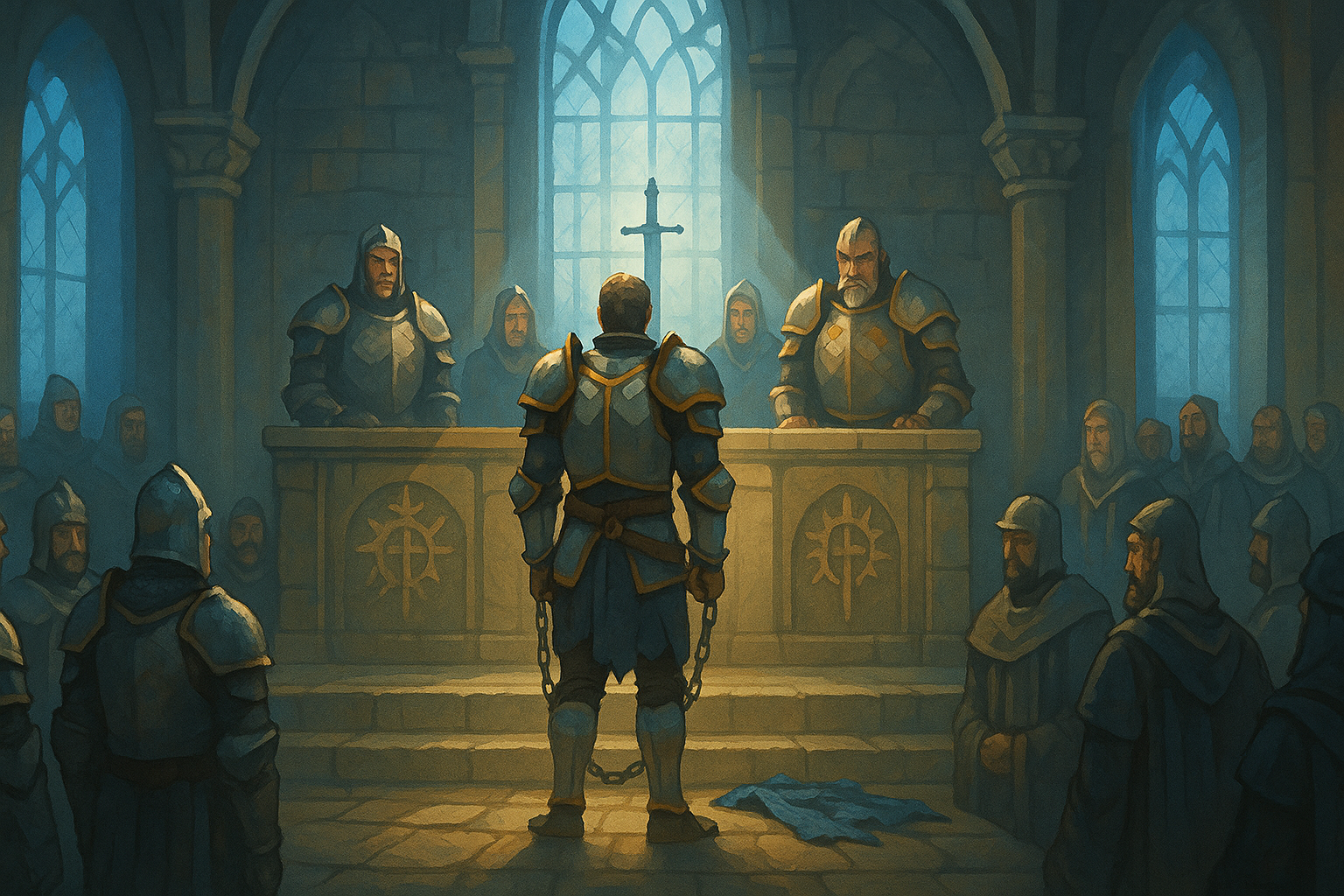
Case Study 3: The Paladin’s Exile
Levers:
- Person: False witness
- Place: Holy citadel
- Wound: Disgrace
- Secret: Political plot
- Relationship: Mentor torn between loyalty and fear
Arc Outline:
Discovery:
The party meets a knight who claims the paladin is wanted.
Confrontation:
A zealot faction captures them for a “trial.” The false witness confesses under pressure.
Resolution:
The paladin chooses between reclaiming honor or rejecting the order forever.
Case Study 4: The Rogue’s Criminal Past
Levers:
- Person: Old crew leader
- Place: Docks
- Wound: Betrayal
- Secret: Hidden treasure
- Relationship: Ex-partner turned enemy
Arc Outline:
Discovery:
A message carved into the rogue’s old dagger: “We’re not done.”
Confrontation:
The ex-partner returns with a new gang and demands the rogue open the vault.
Resolution:
Share the treasure?
Burn the vault?
Take the throne?
Each choice fuels future storylines.
How to Keep the Arc From Derailing the Campaign
A player’s personal story can’t become the whole story.
Use these guardrails:
1. Three Sessions, Max
The arc should feel complete without taking over the campaign.
2. Keep Rewards Group-Focused
Magic items, intel, allies, new regions—everyone benefits.
3. Never Pause the Main Plot
Tie arcs into:
- existing factions
- ongoing enemies
- world events
- NPC crossovers
4. Let the Party Choose to Engage
If they don’t bite, the arc can pause until they do.
5. Recycle What You Don’t Use
Unused NPCs or twists can be cannibalized later.
How to Use Backstory Arcs in Published Adventures
This is where many GMs struggle.
But the truth is: published campaigns want you to do this.
Here’s how to do it cleanly:
1. Turn Backstory NPCs into Adventure NPCs
- Missing brother? One of the AP’s villains took him.
- Corrupt order? Tie them to the AP’s cult.
- Lost mentor? Prisoner in the AP’s dungeon.
2. Turn Backstory Locations into Adventure Locations
Swap a generic dungeon for a personal one.
3. Turn Backstory Secrets into Plot Clues
If a player has a mysterious past:
The AP’s big villain had a hand in it.
4. Tie Backstory Arcs to Major Beats
Insert them at natural story “breathing points”:
- between chapters
- after boss fights
- during downtime
- on travel days
Backstory arcs fit easily as long as you avoid wedging them into crowded chapters.
The Backstory Clock: A Simple Tracking Tool
Borrowing the concept of faction clocks, a Backstory Clock tracks progress in the arc.
Every time players:
- investigate
- confront
- learn
- follow up
Tick the clock.
When full, trigger the final confrontation.
It keeps arcs controlled, predictable, and satisfying.
The NPC Reversal Technique
An easy trick when you’re stuck improvising:
Take any NPC from the backstory and turn them into one of five things:
- Betrayer
- Victim
- Impostor
- Pawn
- Secret ally
This creates instant tension with almost no prep.
Example:
Paladin’s ex-mentor?
Turned out he was framed and tortured by the zealot faction—now he begs for help.
Instant drama. Zero effort.
Sample Backstory Prompts
1. Five-Sentence Backstory Prompts
Perfect for players who overwrite.
- Who was the most important person in your life before adventuring, and what did they teach you?
- What event forced you to leave home or change your path?
- What wound—emotional or physical—still affects you today?
- What secret are you keeping from the party?
- Who out there wants something from you right now?
2. “Lever Extraction” Prompts
Designed for GMs who want clean narrative levers.
Person:
Who is someone from your past whose opinion still matters to you, even if you pretend it doesn’t?
Place:
What location from your history would you avoid returning to unless you had no choice?
Wound:
What loss or failure still shapes how you act?
Secret:
What truth—about you or your past—would cause immediate trouble if revealed?
Relationship:
Who did you leave behind, and what unfinished business do you share?
3. Conflict-Driven Backstory Prompts
Every answer gives you a usable antagonist or tension.
- Who betrayed you, and why do you think they did it?
- Which group, order, gang, or faction desperately wants you back?
- What law did you break (or were accused of breaking), and who still cares?
- Who did you fail to save, and what were the consequences?
- What debt—monetary or moral—do you still owe?
4. Identity & Motivation Prompts
Helps you connect personal arcs to character choices.
- What belief or principle would you kill for?
- What belief or principle would you break?
- What symbol, object, or heirloom represents your past?
- What do you fear becoming?
- What do you hope the world remembers you for?
5. Adventure-Ready Prompts
Designed so every answer becomes a quest hook.
- Name an NPC you desperately want to find—alive or dead.
- Describe something you stole that someone might want back.
- What rumor from your past always follows you?
- Who gave you your first scar?
- What mistake haunts you, even now?
6. Relationship-Centric Prompts
Great for dramatic arcs.
- Who loved you, and why did you leave them?
- Who hates you, and why won’t they let it go?
- Who protected you when you were young, and where are they now?
- Who do you still owe the truth?
- Who swore an oath involving you—and what was it?
7. “GM’s Dream” Backstory Prompts
These create perfect modular arcs with minimal work.
- What name do you avoid saying out loud?
- What location would break you emotionally if you returned?
- Who did you disappoint that you still want to impress?
- What power did you once taste that you should never taste again?
- What unfinished promise still hangs over your head?
8. Optional Group Backstory Prompts
For tighter party cohesion.
- Which two members of the party have seen you at your worst—and what happened?
- Which player character reminds you of someone from your past?
- What shared event binds the group together?
- What physical token connects your characters?
- What threat ties all your histories together?
Conclusion: Backstory Arcs Don’t Need Prep—They Need Structure
You can build entire arcs from a few sentences if you know how to extract the right levers.
All you need is:
- the Backstory Extraction Method
- the Three-Session Arc formula
- modular, flexible improv beats
- player-driven questions
- meaningful choices
- shared-party stakes
When you do this right:
- arcs feel complete
- players feel seen
- the campaign stays focused
- improvisation feels intentional
- pacing never collapses
This is the heart of character-driven storytelling.

Posted on January 5, 2026, in Blog. Bookmark the permalink. Comments Off on How to Improvise Entire Story Arcs From Player Backstories.





 Rokk Talk