Why Every Great Campaign Starts With a Session Zero
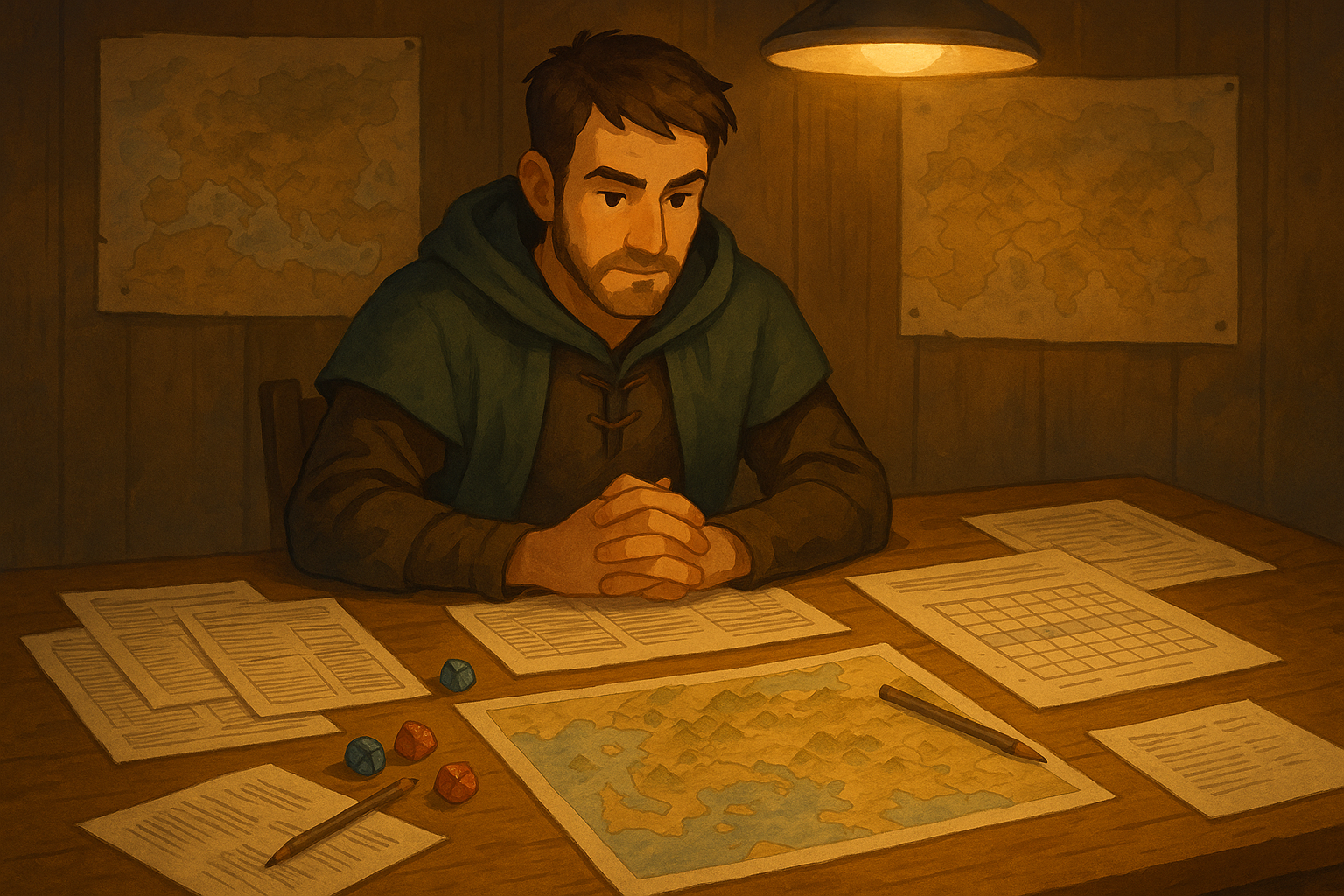
Most campaigns don’t fall apart because of a deadly boss fight, a bad roll, or even scheduling trouble. They fall apart because the group never agreed on what kind of game they were actually trying to play. If you’ve ever run a campaign where half the group wanted political intrigue while the other half wanted to throw goblins into a wood chipper, you already know what I’m talking about.
A Session Zero is the single strongest tool you have to prevent that misalignment. According to Game to Grow’s facilitation research, campaigns with a Session Zero last 2.3 times longer than those without one. D&D Beyond’s community survey notes that 56% of table conflicts begin with tone or playstyle mismatches, not rules disagreements. That means you can prevent over half your potential problems before the adventure ever begins.
This article breaks down exactly how to do that. You’ll get a structured method, specific questions to ask, examples of what goes wrong, and a complete framework for future-proofing your campaign. By the end, you’ll be able to run a Session Zero that genuinely fixes problems before they start—not just a quick chat about character ideas.
Let’s begin.
Why Session Zero Matters More Than Ever
Tabletop gaming has changed. Players expect more clarity, more consistency, and more input into the world they’re exploring. At the same time, GMs juggle busy adult schedules, online play, mixed experience groups, and wildly different genre expectations. Without alignment, you’re building an engine with mismatched parts.
Session Zero isn’t the appetizer. It’s the blueprint.
As Matthew Mercer puts it, “Session Zero isn’t optional—it’s the foundation you build the entire story on.” He’s right. And if you’ve ever watched a campaign collapse because one player brought a slapstick bard to a grimdark survival game, you’ve seen the consequences of skipping that foundation.
According to the 2023 Roll20 GM Sentiment Report, 73% of campaigns end due to scheduling or expectation issues before level 10. Most of that isn’t about scheduling at all—it’s the quiet friction caused by mismatched assumptions.
So your goal is simple: transform Session Zero from a casual chat into a structured conversation that reveals values, expectations, and hidden conflicts before they become future problems.
Step One: Pitch the Campaign Like It’s a Real Product
Start strong by giving players a clear idea of the journey they’re signing up for. Don’t bury it in lore. Keep it simple, direct, and honest.
The Campaign Pitch Should Answer:
- What is the world like?
- What tone are we going for? (Heroic? Gritty? Comedic?)
- What kinds of characters fit here?
- How dangerous is the world?
- What themes are we exploring?
Here’s an example:
“This is a heroic fantasy campaign about restoring a dying kingdom. You’ll face moral choices, political intrigue, and large-scale tactical battles. The world starts low-power and gradually shifts into high magic. Your characters should care about the people living here and have a reason to fight for the realm.”
This pitch instantly filters out edge-lord loners, murder hobos, and “I’m only here for jokes” builds—and that’s the point. A good pitch aligns from the start.
Step Two: Use the Campaign Alignment Matrix
This tool ensures you surface the trends that actually matter. Have every player rate themselves on four axes from 1–5.
The Four Axes
- Tone: Whimsical → Serious
- Power Level: Gritty → High Fantasy
- Spotlight: Combat → Roleplay
- Agency: Sandbox → Directed Story
Patterns emerge immediately.
If four players want high fantasy and one wants swords-and-sandals realism, you now have a conversation before it explodes later. If everyone except one player wants strong narrative direction, you can adjust before your sandbox enjoyer gets frustrated.
This matrix is your early warning system. Display it on one page, and your whole table gets a visual map of possible trouble zones.
Step Three: Define Player Expectations Clearly
Most tables skip this part because it feels awkward. But this is where campaigns live or die. Every player should answer a set of direct questions. These aren’t fluffy icebreakers—they’re the conversations that prevent meltdowns.
The 15 Critical Questions
- Why does your character adventure?
- How much character drama do you enjoy?
- How comfortable are you with PvP elements?
- Are there themes you want to avoid entirely?
- How deadly should combat be?
- Do you prefer leveling milestones or XP?
- How optimized do you want builds to be?
- What’s your tolerance for party conflict?
- How do you handle out-of-game disagreements?
- How much downtime and exploration do you want?
- Do you enjoy puzzles?
- How silly vs. serious should the group be?
- How do you feel about romance in-game?
- What part of your character’s story should be private vs. public?
- What does a “fun session” look like to you?
Entire campaigns can be saved by question seven alone. Nothing derails a game faster than one player optimizing for DPR while others pick spells because they think the names sound cool.
Surface preferences early. Adjust the campaign accordingly.
Step Four: Establish the Table Contract
This isn’t paperwork. This is a social agreement about how you play together. It removes the guesswork and eliminates the “Well, I didn’t know that was a rule…”
Core Areas to Cover
- Attendance & scheduling expectations
- Communication norms
- Rules interpretation (RAW vs. RAI vs. table rules)
- How leveling and loot progression will work
- How to handle slow turns and analysis paralysis
- What happens if someone can’t attend
Most conflicts that implode a campaign happen because people never discussed these items. EN World’s 2022 poll found that 42% of tables report disagreements over homebrew or unclear rules mid-campaign. Solve it now by documenting expectations.
A Session Zero should leave everyone with a clear understanding of how the table functions.
Step Five: Use Safety Tools Without Making It Awkward
Safety tools aren’t about limiting content—they’re about protecting fun. They help people feel secure so they can roleplay boldly. Kienna Shaw and Lauren Bryant-Monk describe them perfectly: “Safety tools aren’t about restriction—they’re about giving everyone the freedom to play.”
What to Include
- Lines and veils (hard limits and fade-to-black boundaries)
- The X-card or pause mechanics
- Topic checklists
- Comfort level scaling for themes like horror or violence
People appreciate being asked. It shows that you’re committed to an environment where everyone can enjoy themselves freely.
Step Six: Define the Party as a Cohesive Group
The loner who doesn’t trust anyone? The rogue who refuses to join the quest? The edgy anti-hero who sneers at “the rules”?
All fixable in Session Zero.
Tie the Party Together
- Shared backstory threads
- A common mentor
- A collective debt
- A mutual goal
- A single event that shaped them all
Here’s an example:
“You all survived the Burning of Caelwyn together. You might not be friends, but you owe your lives to each other. That shared trauma binds you, whether you like it or not.”
Instant cohesion. Instant buy-in. Players now have a reason to invest in the story and each other.
Step Seven: Clarify Power Level and Mechanical Boundaries
Players love to push the edges of the rules. Some want anime-level heroics. Some want gritty realism. If you don’t establish boundaries now, the campaign will fracture later.
Cover Topics Like:
- Resurrection availability
- Long-rest vs. short-rest pacing
- Magic item rarity
- Optimization expectations
- Summons, pets, and companions
- Homebrew allowances
Be explicit:
“This campaign is heroic fantasy. You can pull off big cinematic moments, but you’re not demigods. Superhero-level builds won’t match this tone.”
Suddenly, everyone’s on the same page.
Step Eight: Create a Conflict-Resolution Plan
Your table is made of humans. Conflict will happen. You’re not trying to prevent every disagreement—you’re giving everyone the tools to navigate them constructively.
A Three-Step Conflict Plan
- Pause – Let the moment breathe. No one argues mid-combat or mid-scene.
- Clarify – Each person states what they thought was happening.
- Resolve – Adjust rules, reset expectations, or shift scenes.
This protocol ends 90% of table disputes within two minutes. Game to Grow notes that clear communication structures dramatically reduce player stress and GM burnout.
Step Nine: Build Future-Proofing Into Your Campaign
Campaigns change. People change. Jobs shift. Babies get born. Someone moves. Someone loses interest.
Session Zero isn’t just about now—it’s about later.
Plan for:
- Players leaving the campaign
- Characters retiring
- Tone shifts
- Difficulty adjustments
- Spotlight balancing
- Scheduling disruptions
Use “exit ramps”—planned narrative off-points where characters can gracefully leave or join.
Your future self will thank you.
Step Ten: Run a Short Sample Scene
This step is optional but incredibly powerful.
A 10-minute sample scene lets you test:
- Group chemistry
- Tone
- Combat expectations
- Talk-to-roll ratio
- Character voices
- Spotlight rotation
This is your dry run. Every GM learns things in these 10 minutes that no checklist could ever reveal. A sample scene could immediately uncover that two players wanted a slapstick buddy-cop vibe while the rest wanted dark mystery. Without the test scene, that campaign would’ve cracked by session three.
Step Eleven: Give Everyone a Concrete Takeaway
End your Session Zero with clarity. Provide a short document summarizing the decisions you made. This prevents drift and keeps everyone aligned months later.
Include:
- Campaign pitch
- Tone decisions
- Alignment matrix results
- Group expectations
- House rules
- Safety boundaries
- Attendance agreements
- Spotlight notes
- Party backstory
- Conflict-resolution plan
This is your campaign charter. It stabilizes your entire season.
The Short, Medium, and Full-Length Session Zero Formats
Not every group has three hours to spare. That’s fine. Here’s how to scale.
The 30-Minute Session Zero (For busy adults)
- 5 min: Pitch
- 5 min: Tone & boundaries
- 10 min: Alignment matrix
- 10 min: Party cohesion
The 60-Minute Version
- Everything above
- Deeper expectations
- Spotlight & optimization talk
- Group responsibilities
Full 2–3 Hour Version
- Complete questionnaire
- Detailed safety tools
- Character tie-ins
- Sample scene
- House rules
- Scheduling
- Multi-season campaign prep
Match the format to your table’s needs.
Real Examples of Session Zero Saving a Campaign
Example 1: The Stealth Paladin Problem
A paladin wanted to play a holy crusader. Another player wanted a rogue who stole from the party. Session Zero exposed the clash instantly. We reshaped the rogue into a reformed thief, mentored by the paladin.
Zero friction. Great story.
Example 2: The Optimization Gap
One player built a hyper-optimized sorcerer. Another intentionally chose “flavor over function.” Talking it out, the sorcerer dialed down the cheese and the flavor player agreed to choose at least one combat-relevant ability.
Balance restored.
Example 3: The Horror Resistance Issue
Two players loved body horror. One hated gore. Instead of banning the theme entirely, we used veils to soften the visuals. Everyone got the tone they wanted.
That compromise only happened because we talked early.
Conclusion: Build It Right Before You Build It Big
A Session Zero isn’t a formality. It’s the single most important session of the entire campaign. It prevents misalignment, eliminates confusion, and builds the trust your players need to roleplay boldly. It saves your future self from headaches you can’t yet see. It extends campaign life and strengthens group cohesion.
You can’t stop every problem. But you can catch most of them before they ever reach the table.
Run a Session Zero with intention. With structure. With clarity. And most importantly, with the goal of building a campaign everyone is equally excited to play.

Posted on December 29, 2025, in Blog. Bookmark the permalink. Comments Off on Why Every Great Campaign Starts With a Session Zero.





 Rokk Talk