Building Exit Ramps Into Future Campaigns
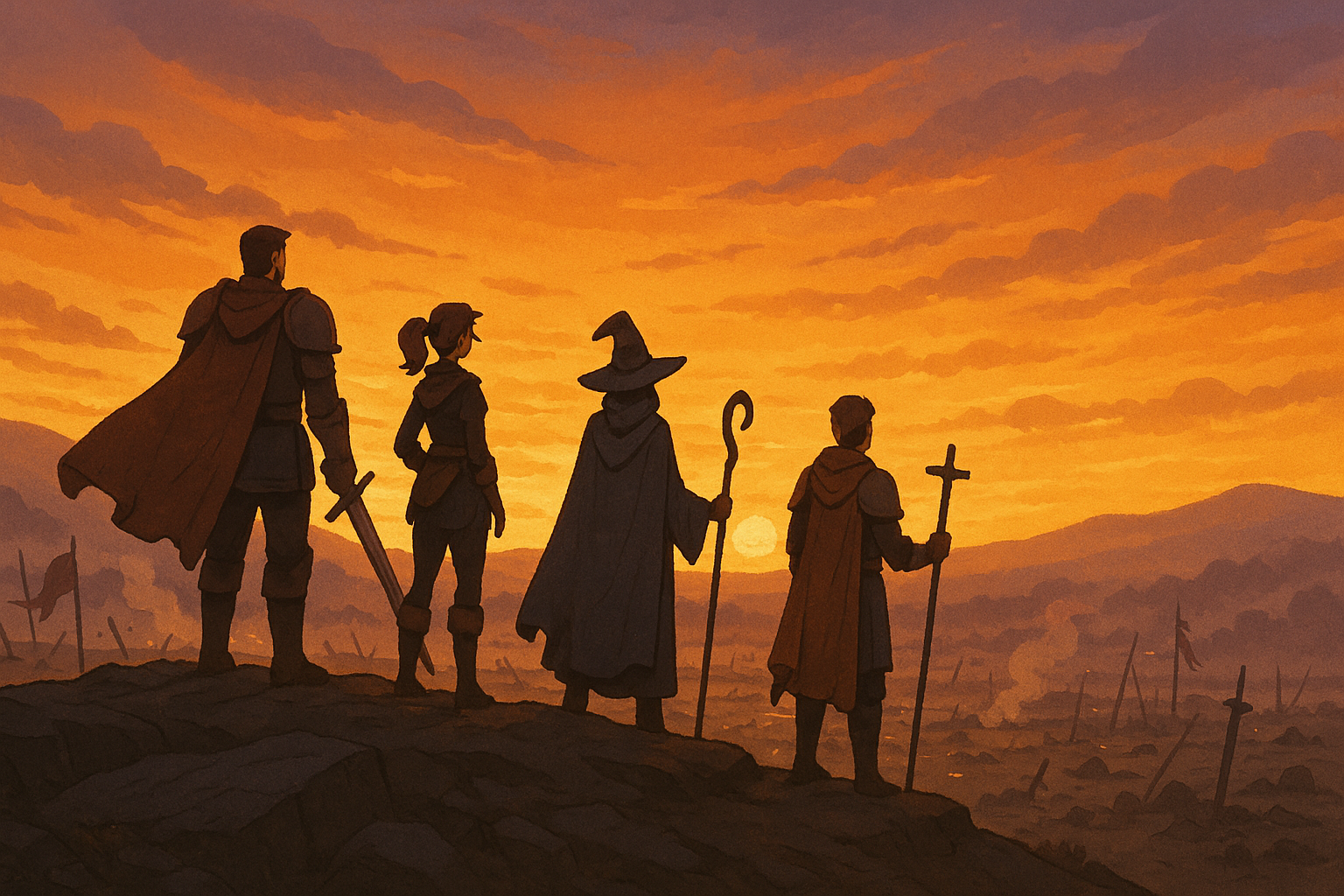
How Short Seasons Make Your Campaigns Stronger, Easier, and Actually Finishable
There’s a moment every Game Master knows all too well.
The group chat goes quiet. A player cancels “just this week.” Someone’s work schedule changes. Your prep sits untouched for days because you’re tired, you’re busy, or you simply aren’t feeling the same spark.
And now you have a problem: You’re supposed to be running a sweeping epic with handcrafted lore, a villain monologue that took six hours to get right, and a final battle your players may never actually reach. You can feel the campaign slipping through your fingers.
Most GMs respond the same way: push harder.
More prep. More notes. More guilt.
But the truth is simple.
The average RPG campaign doesn’t die in battle—it dies off-screen in real life.
Studies and GM surveys routinely show that most campaigns collapse between 6–10 sessions, far earlier than anyone planned. That’s the natural lifespan of many home groups, even when everyone loves the game.
Instead of fighting this reality, you can design for it.
Welcome to a healthier way to run long-form tabletop RPGs: Seasonal campaigns with built-in exit ramps.
Think of them as the theme park safety brakes your campaign has always needed. Short, punchy, 8–10-episode arcs that always end in a place where you can safely stop—no guilt, no drama, no loose-end purgatory. And if everyone’s still energized? Great. Step onto the next ride.
Let’s build a campaign that’s easier on you, kinder to your players, and dramatically more likely to reach a satisfying ending.
The Problem: Campaigns Die Long Before They’re Finished
Let’s start with the elephant in the room: Campaigns rarely stick the landing.
This isn’t speculation. It’s the first thing veteran GMs mention when talking about burnout and campaign length.
- Most campaigns fizzle in 6–10 sessions.
- Very few reach high levels or full finales.
- Burnout and scheduling—not story—are the top reasons.
There are two things happening here, and you’ve probably felt both:
1. The Burden of the Ever-Growing Story
Every session you run expands the world. New NPCs appear. New plot hooks emerge. Unresolved mysteries stack up. Soon the campaign becomes a machine that demands more and more fuel.
Keeping that machine moving requires energy that even experienced GMs don’t always have.
2. Real Life Doesn’t Care About Your Epic Plan
People get promotions. Babies are born. College semesters change. A player moves cities. Another burns out quietly and doesn’t want to say anything.
You can’t predict any of that. But you can build a campaign structure that survives it.
This is where exit ramps change everything.
The Fix: Campaign Seasons With Built-In Exit Ramps
A season is a self-contained story arc that lasts 8–10 sessions, with a clear beginning, middle, and end.
Not “one chapter of a giant multi-year storyline.”
Not “we’ll end eventually when the stars align.”
A season is complete by design.
If you’ve ever watched a British TV series with six episodes and a killer finale, you already know the model. It’s tight, focused, and punchy. It delivers a clear arc and lands cleanly.
The big innovation is the exit ramp—a planned ending built right into the structure.
What counts as an exit ramp?
An in-story moment where the arc can logically end:
- The villain is defeated (or escapes).
- The town is saved (or falls).
- The conspiracy is revealed.
- A location is sealed, unlocked, or destroyed.
- A character arc reaches a natural pause point.
It’s not a cliffhanger and not an abrupt shutdown. It’s a clean, satisfying stop.
And from here, your group has three equally valid paths:
- Stop the campaign.
- Take a break and return later.
- Start a new season that builds on what happened.
Nothing feels unfinished.
Nothing feels like a failure.
Everyone leaves satisfied.
Why 8–10 Sessions Is the Sweet Spot
You didn’t wake up one morning and decide “8–10 sessions sounds nice.”
There’s real reasoning behind this.
1. It matches how players naturally play
The average game group’s real-world momentum lasts 2–3 months. After that, schedules shift and enthusiasm wanes.
An 8–10 session season fits this natural rhythm.
2. It forces focus
When you only have ten episodes, you stop padding your story with filler. Everything becomes tighter:
- One big villain
- One clear conflict
- 2–3 important NPCs
- A single central location or region
Your prep becomes lighter, clearer, and faster.
3. It creates a manageable emotional load
A GM carrying a multi-year epic is carrying a weight that grows heavier every week.
A GM carrying an 8–10 session arc is carrying something finite, clear, and easy to maintain.
4. It reduces guilt
When a campaign stops mid-epic, it feels like failure.
When a season ends after its finale, it feels like success—even if you’re done.
And that alone can save your GM health.
How to Build a Season That Always Ends Cleanly
Let’s turn this into a repeatable structure: your own campaign theme park blueprint.
Every episode is a ride, and every season ends at the same place: the exit gate where you can either walk out or get back in line.
Episode 1–2: The Hook & Inciting Incident
You introduce the setting, the conflict, and the stakes.
Keep it tight. Don’t worldbuild the solar system yet.
Think “the carnival’s in town and someone’s stealing children,” not “the gods have declared total war.”
Episode 3–7: Rising Trouble
Each session pushes the group deeper into the conflict:
- They learn the villain’s name.
- They uncover a conspiracy.
- They lose something important.
- They face a moral choice.
This is where you drop your twists and turn the screws.
Episode 8–10: The Finale Arc
Here’s the magic:
Episode 8 is your first exit ramp.
If life explodes, you can end here with a satisfying close.
Episode 9 sharpens the danger.
Big reveals. Character moments.
You’re steering toward the big finish.
Episode 10 is the climax and ending.
If your players want more?
This is also where you drop a stinger that hints at the next season.
Example Finale Options
- The cult’s ritual is disrupted—at a cost.
- The bandit lord escapes, promising vengeance.
- The haunted manor burns, but the ghost whispers a new name.
- The corrupted artifact is sealed, but the PCs learn it was only one piece of a set.
You’re building stories that complete and stories that can continue.
That’s the dual function of every season.
Real Examples of Season Exit Ramps
Let’s make this concrete with three different campaign styles.
Example 1: The Goblin War (Classic Adventure)
Session 1–2: Goblins raid caravans near a frontier town.
Session 3–7: PCs track the raids to a ruined fortress.
Exit Ramp at Session 8: PCs kill the goblin chief and save the town. Done.
Finale at Session 10 (Optional): Goblin shaman reveals a necromancer backing the raids.
If you continue?
Season 2 is “The Necromancer’s Tower.”
Example 2: Court Intrigue (Urban Campaign)
Session 1–2: PCs are hired to investigate a noble feud.
Session 3–7: They uncover bribery, blackmail, and a hidden assassin.
Exit Ramp at Session 8: They expose the assassin and stabilize the court.
Finale at Session 10: The assassin flees, revealing a rival kingdom’s involvement.
Roll into Season 2: “Shadows of the Border War.”
Example 3: Horror Mystery (Investigation)
Session 1–2: A remote village faces night terrors.
Session 3–7: PCs uncover a cult, strange sigils, and missing townsfolk.
Exit Ramp at Session 8: PCs destroy the cult. Town saved.
Finale at Session 10: Final fight with the corrupted priest, who speaks of “the Sleeper Beneath.”
Boom. Season 2 begins with the cult’s patron.
How to Use Exit Ramps When Real Life Hits
Here’s the moment where many GMs freeze: “What do I say when I need to end early?”
A good exit ramp gives you a clean, natural script.
Script Option A: The Honest Approach
“Hey everyone, I’m starting to feel stretched thin. Episode 8 is coming up and it’s a great stopping point. Let’s aim to wrap Season 1 there and then decide what’s next.”
Clear. Respectful. No drama.
Script Option B: The Break Approach
“Life’s busy right now. We’re about to hit a perfect season finale in two sessions. Let’s take that break and pick things up in the future when schedules settle.”
Shows care for your players and for your own health.
Script Option C: The Pass-the-Torch Approach
“We’re reaching our season finale. After that, if someone else wants to run a season for a bit, I’d love to play.”
Pass the baton without ending the world.
With exit ramps in place, these scripts become normal, not stressful.
How Seasons Reduce GM Burnout
Burnout isn’t just about workload. It’s about ongoing obligation.
When a campaign has no ending, you’re chained to it emotionally—even when you’re tired or overwhelmed.
Seasons change the psychology of GMing:
1. Finite stories are easier to carry
When you know the end is eight weeks away, prep becomes lighter and more exciting.
2. Built-in breaks protect your energy
You step away before burnout hits.
3. Seasons let you rotate systems or GMs
One person runs D&D for a season.
Next, someone else runs a sci-fi mini-campaign.
You stay fresh.
4. Players invest more when stakes feel manageable
A 10-episode arc feels like a commitment they can realistically meet.
Short commitments create stable tables.
How to Pitch Seasons at Session Zero
Here’s your script:
“Instead of running one giant campaign, I’d like to try a seasonal model. Each season is 8–10 sessions with a full story arc and a built-in ending. When we finish a season, we can stop, break, or start a new one depending on how everyone feels.”
Players love this pitch because:
- It feels safe.
- It respects their time.
- They know they’ll get closure.
- They’re not locked into a multi-year project.
It’s the most stable table agreement you can make.
Designing Your Season With the Theme Park Method
This is where the Pointy Hat influence shines:
Think of your campaign like a theme park.
Every season is a land.
Every session is a ride.
And your finale is the grand attraction that everything flows toward.
Step 1: Build the “Land”
Pick a location small enough to matter and big enough to explore:
- A frontier town
- A haunted forest
- A single district of a giant city
- A desert caravan route
- A chain of islands
Small scopes create strong stories.
Step 2: Pick the Headliner
Your villain or main threat is the park’s flagship roller coaster.
Make them clear, interesting, and tied to the land.
Step 3: Build 3–4 Supporting Rides
These are your secondary threats or mysteries:
- A cursed artifact
- A rival faction
- A missing person
- A moral conflict
- A haunted location
These give your middle episodes texture.
Step 4: Build the Exit Ramp
This is an early finale option:
- Kill the lieutenant
- Stop the ritual
- Seal the gate
- Expose the plot
You can use this if life gets chaotic.
Step 5: Build the Finale
This is the splashy, satisfying conclusion your players remember for years.
What About Long Campaigns?
Good news: Seasons don’t stop you from running long campaigns—they make long campaigns easier.
Your “giant epic” becomes a trilogy of 8–10 session seasons:
- Season 1: The Goblin War
- Season 2: The Necromancer’s Tower
- Season 3: The Siege of Blackspire Keep
- Season 4: The Wyrm Queen’s Ascension
Each one has closure.
Each one has break points.
And each one can be skipped, rearranged, or returned to whenever life allows.
This is how you actually reach the big finale: slowly, in digestible chunks.
What Happens When a Season Fizzles?
Here’s the secret: A season can’t fizzle if it has an exit ramp built in.
Even if you stop early, you still hit a satisfying moment.
The villain can fall.
The location can change.
The PCs can rest.
The arc can close.
You never lose.
Why This Works Better Than Any Other Model
Let’s compare.
One-Shots
Great for immediate gratification, bad for depth.
Classic Sandboxes
Fun but easy to wander. Requires a motivated group.
Epic Multi-Year Campaigns
Wonderful when they work… and devastating when they collapse.
Seasonal Campaigns
- Focused
- Manageable
- Satisfying
- Sustainable
- Flexible
- Low-prep
- High-payoff
- Restartable
This is the modern GM’s model for long-form play.
Final Thoughts: Give Yourself Permission to Stop
A finished season is a finished story.
You didn’t quit early.
You didn’t let anyone down.
You told a complete arc that your group will remember.
That’s success.
If you want more?
Run another season.
If life gets busy?
You already ended in the perfect place.
If someone else wants to GM?
Hand off the baton.
If you need a break?
You earned it.
Designing clean exit ramps isn’t just a structural trick—it’s self-care for GMs.
It’s how you stay creative, energized, and excited about running games long-term.
Call to Action
Right now, open your notes and do three things:
- Pick a location that could be the “land” of your next season.
- Pick a threat that could be your headliner.
- Decide what your Session 8 exit ramp looks like.
When you design your campaigns like seasons, everything becomes easier.
The stakes shrink to a manageable size.
The endings arrive reliably.
Your players feel the momentum.
And you, finally, can breathe.
Welcome to the healthiest way to run TTRPGs.
Your next season starts now.

Posted on December 1, 2025, in Blog. Bookmark the permalink. Comments Off on Building Exit Ramps Into Future Campaigns.






 Rokk Talk