How to Run a Session With Zero Prep and Still Look Prepared
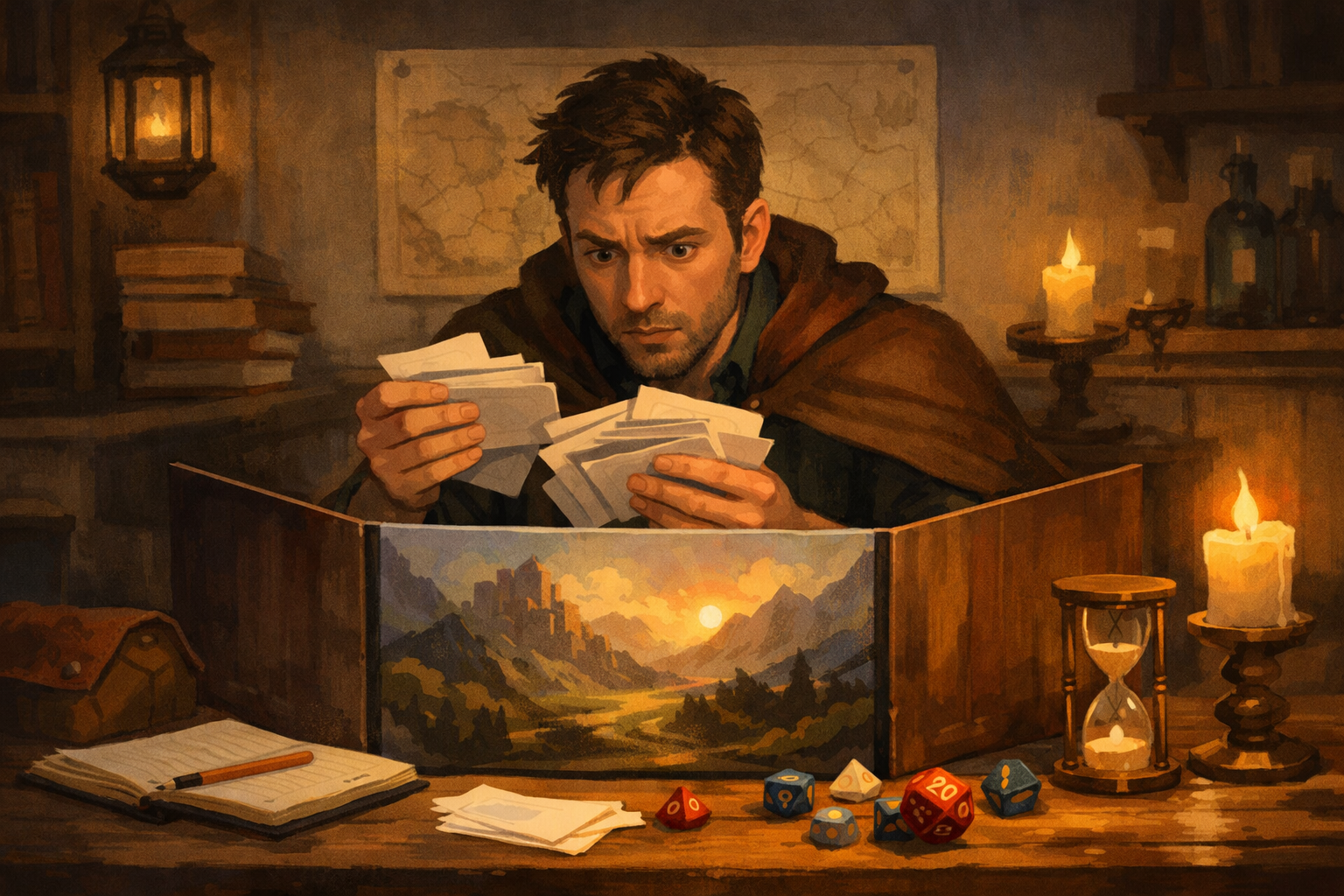
You know the moment.
You sit down at the table. Dice are out. Snacks are open. Everyone looks at you.
“So… what’s happening tonight?”
Your notes are empty. Your brain is tired. And canceling would mean losing momentum you may never get back.
This is the emergency session. And if you’ve run games long enough, you’ve been here.
Here’s the good news: some of the best sessions I’ve ever run were the ones I didn’t prep. Not because I’m a genius improviser, but because I used structure instead of notes. Players don’t need you to have everything planned. They need you to look confident, keep things moving, and make their choices matter.
This article gives you a complete, repeatable way to run a zero-prep session that feels intentional. Not lucky. Not chaotic. Prepared.
Why “Zero Prep” Works Better Than You Think
At this point, some clarification might be in order.
“Zero prep” does not mean “random nonsense.” It means no advance planning before the session starts. You still use structure. You just build it at the table.
According to a prep-time poll summarized by Sly Flourish, nearly 60% of Game Masters spend one hour or less preparing a session, and only about 10% prep for 30 minutes or less. That means most GMs already feel the time squeeze. Zero-prep techniques exist because this problem is common, not because people are reckless.
There’s another reason no-prep sessions succeed. When you don’t have a plot to protect, you listen better.
You react faster. You say yes more often. And players feel it. Many GMs report that their least-prepared sessions end up being the most engaging because the table, not the notes, drives the story.
The trick is avoiding the one thing that kills no-prep play: stalling.
So let’s start with the emergency protocol.
The 10-Minute Emergency Protocol (Even If You Have 0 Minutes)
This protocol works whether you have ten minutes, five minutes, or none at all.
If You Have Zero Minutes
Do not apologize. Do not explain. Start confidently.
- Ask for a recap from the players.
- Restate one unresolved problem.
- Introduce pressure.
That’s it.
Pressure can be a threat, a deadline, or new information. “While you’re discussing that, you hear boots on the stairs.” Motion creates confidence.
If You Have Five Minutes
While players are settling in, write these on a scrap of paper:
- Three NPC names
- Two secrets
- One looming threat
That list alone can carry an entire session.
If You Have Ten Minutes
Add a simple situation:
Someone wants something, something is in the way, and time is running out.
You are now fully armed.
The Illusion of Preparation (What Players Actually See)
Players cannot see your prep. They see your behavior.
Looking prepared is about presentation, not paperwork.
Visible Artifacts Matter
Have one page or card in front of you. It doesn’t matter what’s on it. Players read visible notes as competence.
On mine, I usually have:
- NPC names
- A short threat countdown
- A few bullet points labeled “Secrets”
That’s enough.
Confidence Comes From Framing
Start sessions with declarative language.
Instead of:
“Uh, so… what do you want to do?”
Say:
“When we last left off, you were standing outside the barrow as the chanting grew louder inside.”
Same moment. Very different energy.
Call for a Roll Early
An early Perception, Knowledge, or Insight check signals structure. Even if the result feeds information you invent on the spot, players assume it was planned.
This is stagecraft, not deception.
The Three-Scene Spine (Your Session’s Hidden Engine)
Every zero-prep session runs on a simple engine: three scenes. You can stretch them or compress them, but never skip them.
Scene One: The Hook
This is the problem arriving.
Examples:
- A messenger collapses at their feet.
- A ritual is already in progress.
- An ally is missing and time-sensitive.
Keep it concrete. Keep it urgent.
Scene Two: The Complication
Something changes the situation. New information. A betrayal. A cost they didn’t expect.
This is where you reveal a secret.
One of the most effective no-prep techniques, popularized by the Lazy DM method, is keeping a list of secrets or clues that can be dropped anywhere. Secrets are flexible. They feel planned. And they give players agency because they change decisions, not outcomes.
Scene Three: The Decision
End the session with a choice.
Fight or flee. Trust or expose. Save one thing or another.
A session without a decision feels unfinished. A session with a decision feels authored.
Five Universal Tools That Never Fail You
These tools show up again and again in successful no-prep games.
1. Secrets and Clues
Write five. Use two. Save the rest.
Secrets should answer questions players haven’t asked yet. Who is lying. What happens next. What this place really is.
They turn improv into revelation.
2. Situations, Not Plots
This idea comes from the “tools, not contingencies” school of GMing. Instead of planning what players will do, you define what others are doing.
- What does the villain want?
- What happens if no one intervenes?
- What changes over time?
Now the world moves even if the players hesitate.
3. A Countdown Clock
- A ritual completes in six steps.
- Guards arrive in three rounds.
- The bridge collapses at dawn.
Write a number. Tick it down when players hesitate. Tension skyrockets.
4. Two Flexible Encounters
Have one social conflict and one combat idea you can reskin.
A mercenary group can be guards, cultists, or rivals. A tense negotiation can be a hostage scene or a tribunal.
Flexibility beats specificity.
5. Leading Questions
Ask questions that give you material.
- “What rumor have you heard about this place?”
- “Why does this NPC recognize you?”
- “What went wrong the last time you were here?”
Players love contributing. You get free content.
What to Do When Your Brain Goes Blank
This will happen. Even to veterans.
Here are seven recovery moves that buy you time and momentum.
- Cut to action. Something happens now.
- Introduce a new threat.
- Reveal a secret.
- Ask a leading question.
- Advance the countdown.
- Change the location.
- End the scene decisively.
Never sit in silence deciding what happens. Motion first. Logic later.
Common Questions About No-Prep Sessions
“Is zero-prep actually sustainable?”
Yes, if you use structure. Pure chaos burns you out. Simple frameworks reduce cognitive load.
“What if I’m bad at improv?”
You’re not bad at improv. You’re bad at stalling. Use tools that force motion.
“Won’t players notice?”
Players notice hesitation, not improvisation. Confidence covers many sins.
“Is this fair to newer GMs?”
It can be, if you keep the structure tight. That’s why the three-scene spine matters.
Why This Works Long-Term
Zero-prep play builds skills you use even when you do prep.
- You listen better.
- You prep less but more effectively.
- You stop overplanning outcomes.
Over time, your brain builds reusable patterns. That’s why experienced GMs seem effortless. They aren’t winging it. They’re recognizing shapes.
Your Next Step
Before your next session, do one thing.
Create a single index card with:
- Three NPC names
- Two secrets
- One threat countdown
Put it in your GM bag.
That card is your safety net. You may never need it. But knowing it’s there changes how you run the game.
And if tonight becomes an emergency session?
You’re ready.
If this helped, try running one intentionally un-prepped session this month. Treat it as practice, not failure. You may be surprised which session your players talk about the longest.

Posted on March 16, 2026, in Blog. Bookmark the permalink. Leave a comment.




 Rokk Talk
Leave a comment
Comments 0